Miyota vs Mingzhu vs Clone Movements in Replica Watches: Full Comparison
Miyota, Seiko, and Chinese clone movements compared for replica watches. Timekeeping accuracy, daily wear durability, and which movement suits your needs.

Language selection
Journal
Dive into replica watch construction, clone calibers, case tolerances, water resistance limits, and the technical factors that affect long-term performance.

Featured guide
Replica Watch KnowledgeA complete guide to the seven main replica watch types — dive, dress, pilot, field, skeleton, sports, and vintage. See specifications and buyer guidance.
Read the guideResearch library
Search by question or narrow the library by topic. Every result links to a stable, indexable article.
10 guides
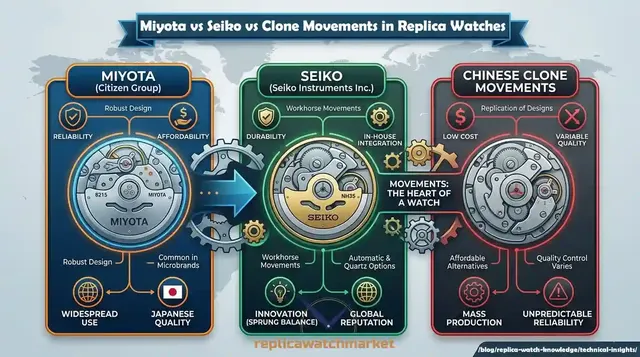
Miyota, Seiko, and Chinese clone movements compared for replica watches. Timekeeping accuracy, daily wear durability, and which movement suits your needs.

The movement inside a replica watch determines how it performs, how long it lasts, and how much maintenance it requires. Read practical buyer guidance.
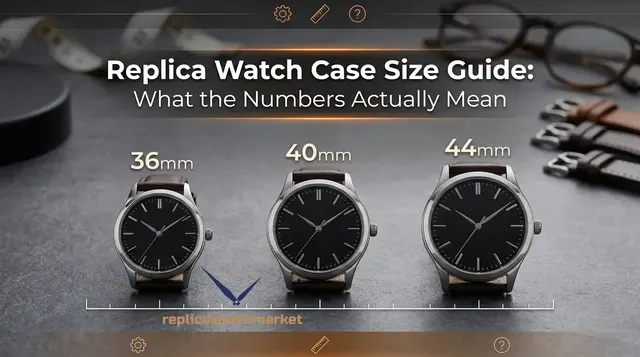
31mm to 46mm — every case size in our catalog explained. Read the guide for definitions, specifications, practical limits and buyer-focused quality checks.
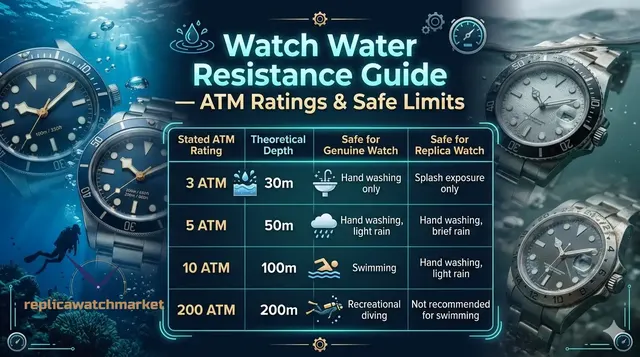
Water resistance is one of the most misunderstood specifications in the replica watch market. Explore the key specifications and practical buyer guidance.
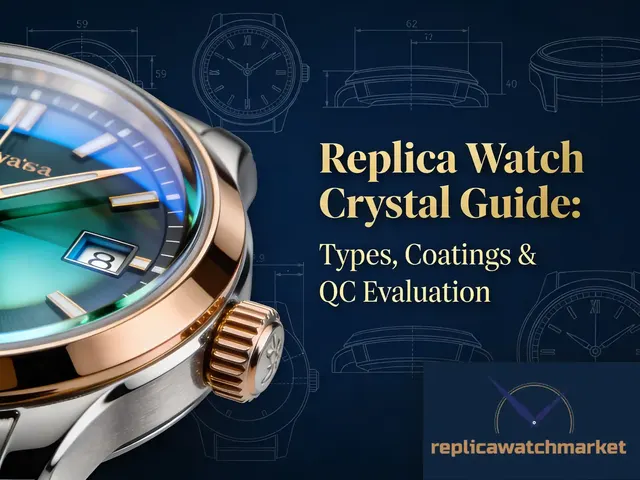
Every crystal type used in replica watches — sapphire, mineral, AR coating, domed profiles, cyclops lens, and more. See specifications and buyer guidance.
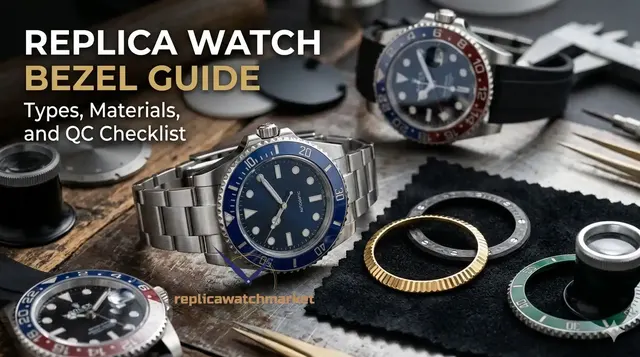
The bezel is the ring surrounding the watch crystal — one of the most visible components on any watch and one of the most scrutinized in replica evaluation.
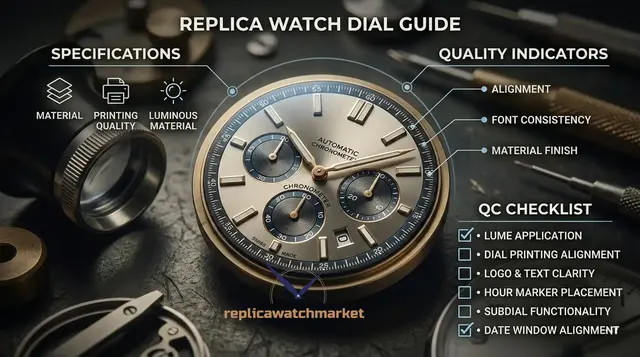
A complete guide to replica watch dial specifications — dial types, indices, sub-dials, date windows, and lume. Explore specifications and buyer guidance.
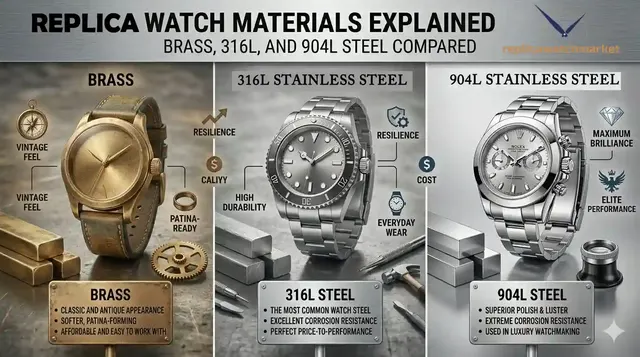
Brass, 316L, and 904L — what each material grade actually delivers in replica watches. Read the guide for specifications, practical limits and buyer checks.

Compare Swiss-style and Japanese movements in replica watches — why movement choice matters for daily use, reliability, and long-term satisfaction.

Every strap and bracelet type used in replica watches — rubber, leather, Oyster, Jubilee, integrated, ceramic, and more. Read practical buyer guidance.
Try a broader phrase or choose all topics.
Technical reference
This 11-article technical collection turns specification labels into checks for function, fit, finishing, maintenance and realistic daily use.
Movement coverage includes Replica Watch Movements Explained: Miyota, Automatic & Chronograph Watches, Miyota vs Mingzhu vs Clone Movements in Replica Watches: Full Comparison, and Swiss vs Japanese Movements in Replica Watches: What Really Matters?. Use the movement explainers to distinguish automatic, quartz, chronograph and clone-style descriptions, then check which named calibre appears on the exact product record. The comparison articles can describe architecture, expected operation and service considerations, but they cannot identify a movement from an exterior image alone. If future maintenance matters, confirm the calibre before ordering and ask an independent local watchmaker whether that movement family is one they will inspect or service.
Case size, case material, bezel, dial, crystal and bracelet work together. A diameter without thickness or lug-to-lug length gives an incomplete picture of fit; a crystal name says little about coating quality; and a steel label does not describe finishing by itself. Open the component guide relevant to the uncertainty, then compare its checklist with the same listing’s photographs and written fields. This avoids assembling an imaginary specification from facts that belong to several different references.
Water resistance deserves its own review because visual cues and printed ratings can be misunderstood. A screw-down crown or dive-style case does not prove that one unit has intact seals or has passed a pressure test. Read the water-resistance guide alongside the case and crystal material, then follow the published statement for the product. Before swimming or submersion, obtain an appropriate test from a competent professional; daily care advice cannot turn an untested watch into a certified one.
For a practical review, begin with the SKU and full dimensions, identify the stated movement, inspect dial and bezel alignment, check the crystal and case description, and finish with bracelet or strap construction. Note which details are visible, which are written and which remain unknown. That separation makes questions to the seller more precise and gives you a stable record for later comparison. It also keeps technical language useful: every term should lead either to observable evidence, a stated field or a clear request for confirmation.