Replica Watch Types Explained: Dive, Dress, Pilot, Field, Skeleton, Sports & Vintage
A complete guide to the seven main replica watch types — dive, dress, pilot, field, skeleton, sports, and vintage. See specifications and buyer guidance.

Language selection
Journal
Learn how replica watches differ in quality, movements, materials, and factory details through clear, technical explanations without marketing hype.
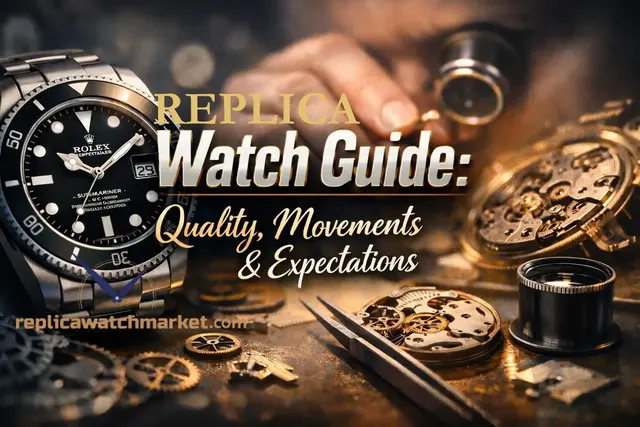
Featured guide
Replica Watch KnowledgeReplica Watch Guide to understanding replica watches clearly, including quality levels, movement types, factory differences, common myths, and expectations.
Read the guideResearch library
Search by question or narrow the library by topic. Every result links to a stable, indexable article.
7 guides
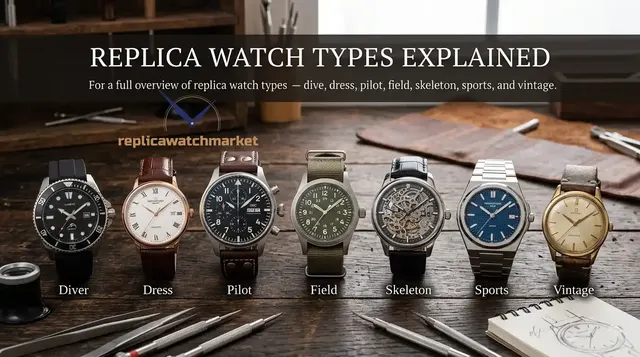
A complete guide to the seven main replica watch types — dive, dress, pilot, field, skeleton, sports, and vintage. See specifications and buyer guidance.
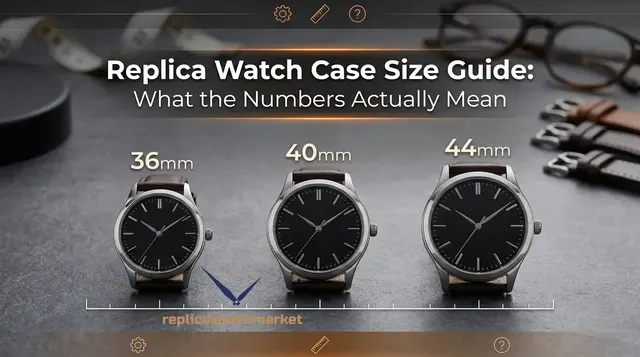
31mm to 46mm — every case size in our catalog explained. Read the guide for definitions, specifications, practical limits and buyer-focused quality checks.
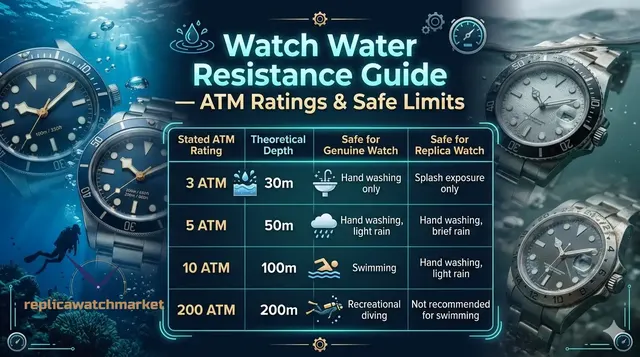
Water resistance is one of the most misunderstood specifications in the replica watch market. Explore the key specifications and practical buyer guidance.
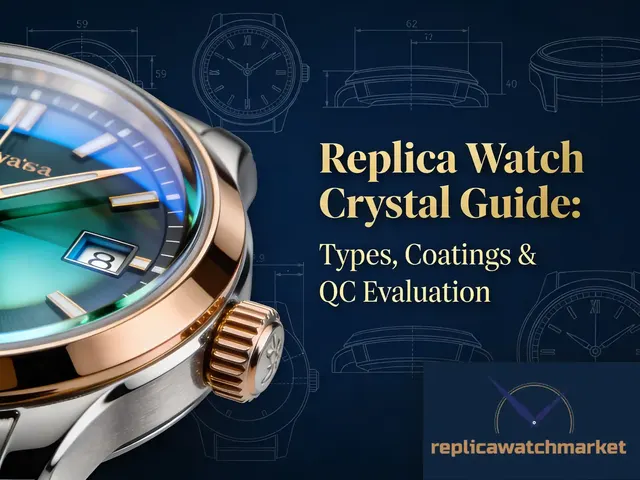
Every crystal type used in replica watches — sapphire, mineral, AR coating, domed profiles, cyclops lens, and more. See specifications and buyer guidance.
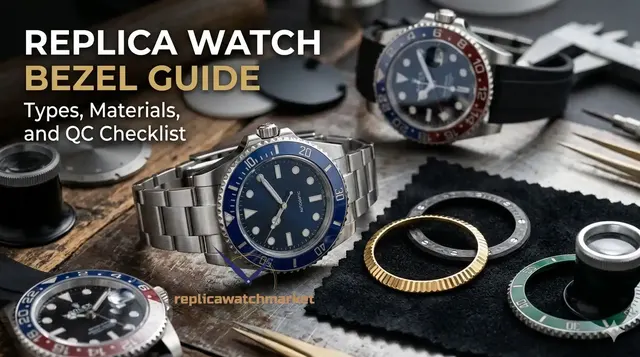
The bezel is the ring surrounding the watch crystal — one of the most visible components on any watch and one of the most scrutinized in replica evaluation.
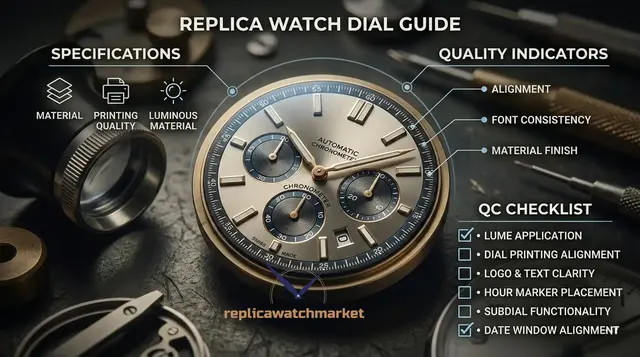
A complete guide to replica watch dial specifications — dial types, indices, sub-dials, date windows, and lume. Explore specifications and buyer guidance.
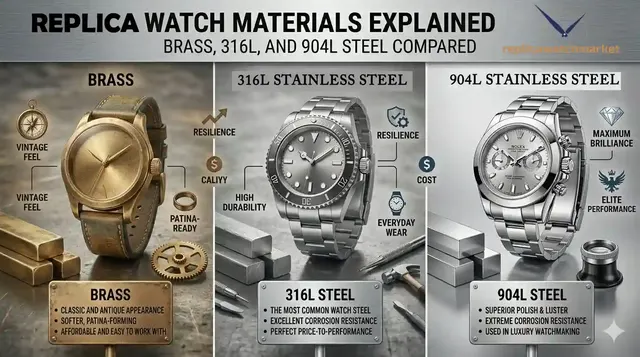
Brass, 316L, and 904L — what each material grade actually delivers in replica watches. Read the guide for specifications, practical limits and buyer checks.
Try a broader phrase or choose all topics.
Knowledge foundation
This eight-guide foundation explains the vocabulary and physical details used elsewhere on the site, from watch type and case proportions to materials, crystals, bezels and water-use limits.
The collection currently opens with Replica Watch Guide: Quality, Movements & Expectations, Replica Watch Materials Explained: Brass, 316L, and 904L Steel Compared, and Replica Watch Water Resistance Guide — ATM Ratings & Safe Limits. The broad guide establishes the main quality and movement terms, while the watch-types article separates dive, dress, pilot, field, skeleton, sports and vintage-inspired designs by their intended form and features. Read these pages before a model comparison if words such as automatic, chronograph, sapphire, 316L or 904L are unfamiliar. A shared vocabulary makes product descriptions easier to compare and reduces the temptation to treat promotional grade names as technical standards.
Case, dial, bezel, crystal and bracelet details should not be evaluated in isolation. Case dimensions influence fit; the crystal affects visibility; bezel geometry changes both appearance and operation; and the attachment between case and strap influences comfort. Each component guide supplies a focused checklist, but the most useful review compares those points on the same product code and photograph set. That approach reveals whether the published specification is internally coherent without claiming facts that the listing does not provide.
The water-resistance guide explains why a printed depth or ATM value is not a substitute for the condition of an individual watch. Crown position, seals, case assembly and later handling all matter, and a product family’s appearance does not establish that a specific unit has been pressure tested. Use the article to understand the terminology, then check the statement on the exact listing and obtain an appropriate independent test before exposing a watch to water. That is more reliable than inferring capability from a dive-style bezel or dial.
Knowledge pages are reference material, not a substitute for the item being sold. When a guide describes a material, dimension or quality indicator, return to the live listing and verify that the same field is actually stated for the chosen SKU. Compare the written details with the available photographs, and use the glossary when two sellers use the same term differently. If a specification is absent, ask for confirmation rather than filling the gap with an assumption drawn from another model or an older article.