On this page 10 sections
Article at a glance
- Reading time
- 8 minutes
- Article length
- 1,654 words
- Topic
- Replica Fundamentals
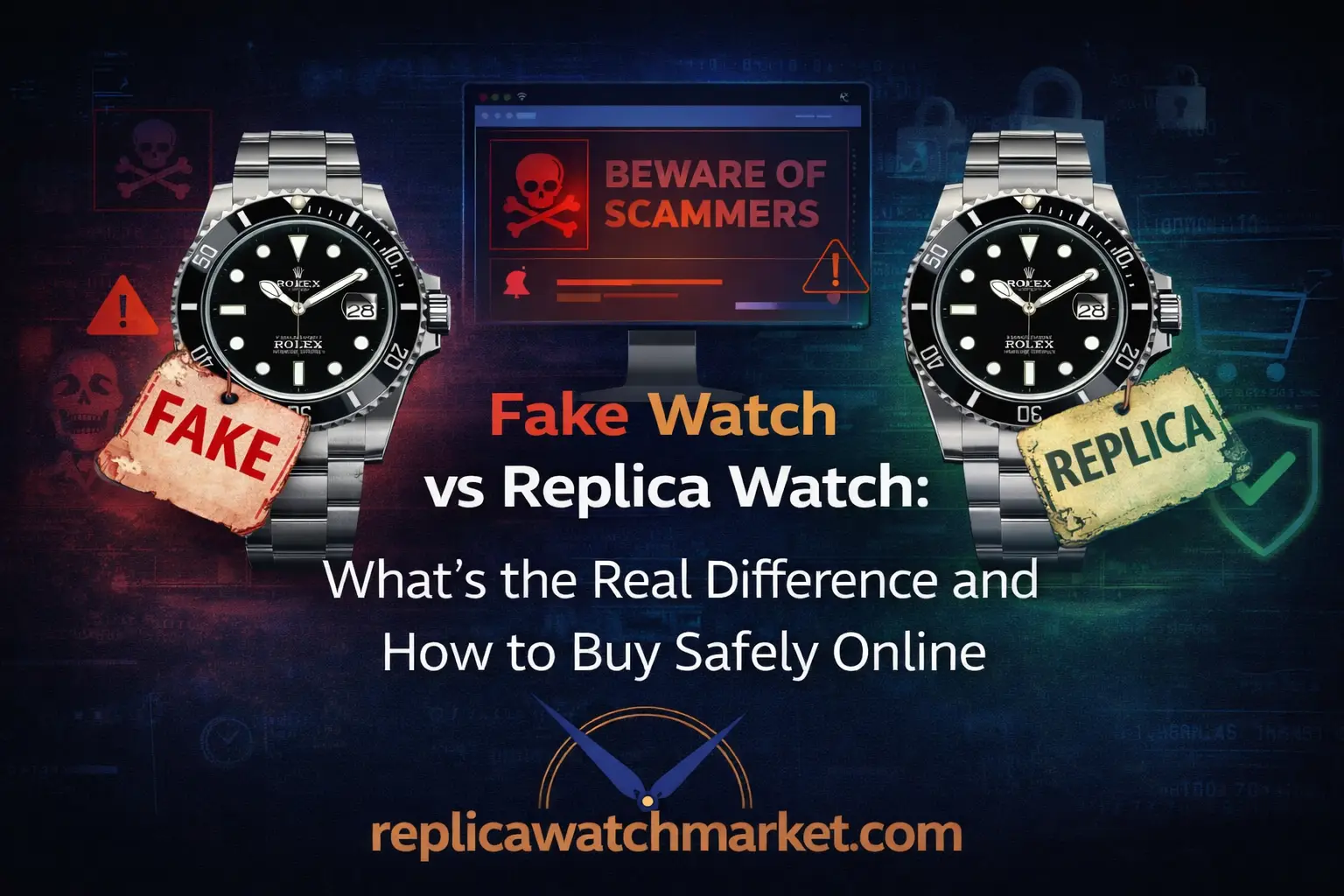
When shopping for luxury-style watches online, many buyers encounter two confusing terms: fake watches and replica watches. At first glance, they may seem interchangeable — but in reality, they represent very different levels of quality, intent, and buying experience.
Understanding the difference between fake and replica watches is primarily about terminology, production intent, and quality standards. This article explains the conceptual and structural difference between the two clearly and without marketing language. For a broader foundation on quality levels, movements, and realistic expectations, see our main Replica Watch Guide.
What Is a Fake Watch?
A fake watch is typically a low-quality imitation produced with one goal: to look similar from a distance while being sold as cheaply as possible. These watches focus on appearance only, with little or no attention paid to performance, materials, or durability.
Common characteristics of fake watches include poor finishing and misaligned dials, low-grade quartz movements, lightweight cases made from cheap alloys, short lifespan, and frequent mechanical failures. Fake watches are often sold on unverified marketplaces, social media ads, or street markets. They may look acceptable in photos but typically fail quickly in real-life use.
The term "fake" in the watch context is not simply about being non-genuine — it specifically refers to low-effort, low-quality imitations where cost reduction is the only priority. For a practical guide on identifying low-quality Rolex-inspired imitations, see our how to spot a fake Rolex guide.
What Is a Replica Watch?
A replica watch is designed to closely recreate the look, feel, and wearing experience of a luxury timepiece. High-quality replica watches aim for visual accuracy, solid materials, and reliable movements — not authentication or brand heritage.
Key features of quality replica watches include reliable automatic movements, stainless steel or ceramic cases, sapphire crystal, proper weight and wrist balance, and attention to dial details and finishing.
Replica watches are typically purchased by informed buyers who understand their limitations and prioritize design access and daily wearability over authenticity or investment value.
Fake vs Replica Watch: The Core Differences
| Aspect | Fake Watch | Replica Watch |
|---|---|---|
| Purpose | Cheap imitation, low cost only | Visual recreation with functional reliability |
| Materials | Cheap alloys, mineral glass | Stainless steel, sapphire crystal |
| Movement | Basic or unspecified quartz | Automatic or reliable proven calibers |
| Durability | Short-term, degrades quickly | Medium to long-term with proper care |
| Finishing | Poor, misaligned, inconsistent | Accurate dial printing, clean case work |
| Buying Experience | Unclear, no support, no specs | Structured, transparent, specified |
| After-Sales | None | Support available from reputable sellers |
In simple terms: a fake watch prioritizes low cost over everything else. A replica watch attempts to balance visual accuracy with functional reliability. Not all replicas are fakes — but all fake watches are low-quality imitations regardless of what they are called.
Why Buyers Confuse Fake and Replica Watches
The confusion comes largely from inconsistent terminology. Many sellers incorrectly label cheap products as "replicas" to appear more credible, while some buyers use "fake" to describe all non-original watches regardless of quality. In reality, fake watch means low effort and low quality, while replica watch refers to a higher level of craftsmanship and an informed purchase.
Marketing language and unrealistic expectations drive much of this confusion. Many common misconceptions about replica watches — including the assumption that all replicas are identical to fakes — are addressed in our article on 7 myths about replica watches.
Where Are Fake Watches Usually Sold?
Fake watches are commonly found on random unverified marketplaces, pop-up online stores with no after-sales support, social media ads with aggressive pricing and no specifications, and physical street markets. These sellers rarely provide clear product specifications, after-sales support, or reliable return policies. The absence of structured communication and product transparency is one of the clearest indicators of a fake watch operation.
Where Should You Buy Replica Watches?
Buyers generally reduce uncertainty by choosing structured and transparent platforms that clearly explain specifications, materials, movement types, and buyer protection terms. Established platforms with consistent product descriptions, responsive communication, and clear ordering processes tend to offer a more predictable buying experience.
Reputable replica watch platforms typically provide detailed product descriptions with stated movement type and materials, clear category organization by brand and model, customer support before and after purchase, and defined return and guarantee terms. For a full overview of what to look for in a reliable seller and how the ordering process works, see our complete buying framework and shipping & delivery guide.
General Buying Considerations
When evaluating any replica watch, basic evaluation principles apply regardless of platform. Buyers should focus on clarity of specifications and overall transparency rather than price alone.
Key considerations include the stated movement type — automatic versus unspecified quartz — case and crystal materials such as stainless steel and sapphire, clear product photography from multiple angles, and structured store presentation with consistent descriptions. For a detailed step-by-step evaluation process, see our guide on how to choose a high-quality replica watch. For payment safety and scam patterns to avoid, see our payment safety guide.
Choosing the Right Replica Watch Style
Replica watch styles vary in case design, dial layout, and overall wrist presence. Rather than focusing only on brand recognition or price, buyers should consider how a particular design fits their daily use and personal preferences. Clean, versatile models suit everyday wear, while sport-oriented or technical designs appeal to those who prefer a more distinctive look.
For a broader discussion on how replica watches fit different lifestyles and value perspectives, see our article on replica watches and changing value perception. For brand-specific style guides, browse our Buying Guides Library.
Final Thoughts: Fake vs Replica Watches
The difference between fake and replica watches goes beyond marketing terminology. It reflects real differences in quality standards, production intent, material choices, and buyer experience. Understanding this distinction helps set realistic expectations and reduces the risk of disappointment.
When buyers focus on materials, movement quality, and seller transparency — rather than price alone — they are better equipped to avoid low-quality products and misleading claims. Knowledge plays a more important role than impulse in making decisions that lead to long-term satisfaction.
Understanding the terminology difference is only the first step. For a practical breakdown of what to evaluate before purchasing, see our guide on how to choose a high-quality replica watch. For movement-specific guidance, see our movements explained guide.
Frequently Asked Questions About Fake Watches vs Replica Watches
What is the main difference between a fake watch and a replica watch?
A fake watch is a low-quality imitation focused solely on appearing similar from a distance at the lowest possible production cost. A replica watch is a higher-quality recreation designed to closely follow the visual accuracy, materials, and wearing experience of a luxury model. The core difference is production intent and quality standard — not simply the fact that neither is a genuine manufacturer piece.
Are replica watches the same as fake watches?
No. The terms are often used interchangeably in casual conversation, but they describe different products. All fake watches are non-genuine, but not all replica watches are fakes. High-quality replica watches use solid materials, reliable movements, and structured production — significantly different from cheap street-market imitations. The confusion is largely driven by inconsistent marketing terminology.
Why are fake watches usually cheaper than replica watches?
Fake watches use the cheapest possible materials — basic alloys, mineral glass, unspecified quartz movements — and have minimal quality control. Replica watches, particularly mid-tier and higher models, use stainless steel cases, sapphire crystal, and reliable automatic movements. These material and production differences directly create the price gap.
Are replica watches worth buying?
For buyers who approach them with realistic expectations, yes. Replica watches offer access to luxury design language and daily wearability at a fraction of genuine prices. They are not financial investments, they are not identical to genuine watches, and they require realistic expectations around longevity. When those expectations are aligned, most buyers report positive ownership experiences.
How can I avoid buying a fake watch online?
Focus on seller transparency rather than price. Look for clearly stated movement types, case materials, and product specifications. Avoid platforms with aggressive pricing, vague descriptions, or no after-sales support. Established platforms with responsive communication and structured ordering processes are significantly less likely to deliver fake watches. For a full guide, see our replica watch safety guide.
Where should I buy replica watches online?
Buy from platforms that clearly state movement type, materials, and buyer protection terms. Look for structured product descriptions, responsive customer support, and transparent ordering processes. For a full evaluation of what makes a seller reliable, see our complete buying framework.
Do replica watches last longer than fake watches?
Yes, significantly. Quality replica watches use stainless steel cases, reliable automatic movements, and sapphire crystal — materials designed for medium to long-term daily use with proper care. Fake watches use cheap alloys and basic quartz movements that degrade quickly. The lifespan difference between a quality replica and a fake watch is substantial.
Can replica watches be worn daily?
Mid-tier and higher replica watches with quality movements are well suited for daily wear. With reasonable care — avoiding moisture exposure, protecting from strong shocks, storing properly — they can provide reliable everyday performance for several years. For a detailed breakdown of daily use expectations, see our daily wear guide.
Are fake watches ever a good choice?
Rarely. Even for buyers on very limited budgets, a fake watch typically fails quickly and provides poor value. Entry-level replica watches offer meaningfully better materials and longevity than fake watches at a modest price difference. The short lifespan and inconsistent performance of fake watches make them a poor investment even at low price points.
How do I know if a replica watch is high quality?
Focus on stated specifications rather than marketing language. High-quality replica watches will clearly state movement type, case material, and crystal type. Look for stainless steel cases, sapphire crystal, and a clearly specified automatic movement. Avoid watches described only with vague terms like "AAA" or "perfect" without supporting specifications. For a detailed checklist, see our how to choose a high-quality replica watch guide.