On this page 10 sections
Article at a glance
- Reading time
- 9 minutes
- Article length
- 1,823 words
This article is part of our broader series on the replica watch industry, market structure, and manufacturing dynamics. For a complete overview of how replica watches are produced and distributed, see our main guide: Replica Watch Manufacturing & Market Explained.
Renewed political and diplomatic tensions between Japan and China have attracted significant attention in recent months. While headlines focus on maritime disputes and regional security, the downstream effects of this situation have extended into global manufacturing in ways that are less visible but directly consequential — including within the replica watch industry. Watch movement supply chains, pricing structures, and production decisions at the Guangzhou level have all been affected. This article explains how and why.
Japan and China: A Critical Manufacturing Relationship
Japan and China share one of the most consequential industrial relationships in the world — one that persists despite consistent political friction. Japan's manufacturing reputation is built on precision engineering: watch movement design, micro-component production, and high-tolerance mechanical assembly. China's industrial strength lies in scale: large-volume production, efficient assembly operations, and global logistics infrastructure that can move finished goods to any market within days.
In the replica watch sector, these two roles are structurally dependent on each other. The most widely used movements in high-end grade replica watches — particularly the Miyota automatic caliber family — are Japanese in origin. The watches themselves are assembled, cased, and distributed through the Chinese production network centered on Guangzhou. When political tension strains the relationship between these two industrial systems, the effects move through the supply chain quickly, because there is no redundant fallback that can absorb the disruption at comparable scale or quality.
Recent Tensions and Supply Chain Uncertainty
The current wave of Japan-China tension has not produced a trade embargo or formal industrial decoupling — but it does not need to in order to affect supply chains. Even limited diplomatic friction introduces friction at the operational level: increased customs scrutiny, higher insurance and compliance costs on cross-border component shipments, and uncertainty among procurement managers about whether to stockpile inventory or wait. Each of these responses adds cost and delays somewhere in the chain.
For an industry where movement sourcing is a primary cost variable and production runs are tuned closely to demand, this kind of diffuse uncertainty has tangible effects. Suppliers adjust pricing to protect against anticipated disruption before that disruption actually arrives. Producers adjust batch sizes and model selection to concentrate resources on their most reliable supply lines. These responses are rational, but they cascade into higher prices and reduced availability for buyers at the end of the chain.
Why Watch Movements Matter So Much
A watch movement is not a commodity component that can be easily substituted. It is the mechanical core that determines timekeeping accuracy, operational reliability, and long-term durability — and it is the most technically demanding component to produce at consistent quality. In the replica watch market, movement selection defines the quality tier of the finished piece more than any other single decision.
Japanese automatic movements — particularly the Miyota family — have been the dominant choice for high-end grade replica production for a straightforward reason: they offer proven engineering, stable performance across temperature and humidity conditions, and wide service availability through independent watchmakers worldwide. These are not decorative components. They are functional calibers that determine whether a watch remains accurate and operational over years of daily use. When these movements become harder to source or more expensive to acquire, the consequences propagate through every tier of the production and pricing structure. For a detailed breakdown of movement types used in replica production, see Replica Watch Movements Explained.
Movement Price Increases in the Replica Watch Market
The price increases currently visible in the replica watch market are not the result of an actual supply interruption — they are the result of anticipatory pricing by suppliers who are managing risk. When suppliers assess that political tension between Japan and China is likely to result in trade complications, they adjust prices preemptively to protect their margins against future disruption. This is standard behavior in manufacturing supply chains operating under geopolitical uncertainty.
The downstream effect for replica watch producers is a higher base cost per unit — most directly felt on models equipped with Japanese automatic movements. Higher movement costs lead to higher wholesale prices, which leads to higher retail prices for buyers, and in some cases to production adjustments: shorter runs, more selective model offerings, or a shift toward Chinese domestic calibers as a cost-control measure on lower-tier pieces. Buyers who track replica watch pricing over time will recognize this pattern from previous periods of supply chain stress.
Why Replica Watches Are More Sensitive to These Changes
Established luxury brands have structural buffers that replica producers do not. A major Swiss watch manufacturer can absorb component cost increases through brand equity, inventory reserves, and a customer base that expects price increases as a feature rather than a problem. Pricing adjustments are announced in advance, framed as reflecting craftsmanship investment, and accepted because the alternative is a waitlist rather than a competing product.
Replica producers operate with tighter margins and closer alignment to real production costs. They cannot absorb sustained cost increases — they adjust pricing in response to them, and they do so faster than luxury brands because the market structure demands it. This sensitivity makes the replica market an unusually accurate real-time signal of what is actually happening in global manufacturing: when costs rise in the production chain, prices in the replica market reflect that rise within weeks, not quarters.
China's Role in Adapting Production
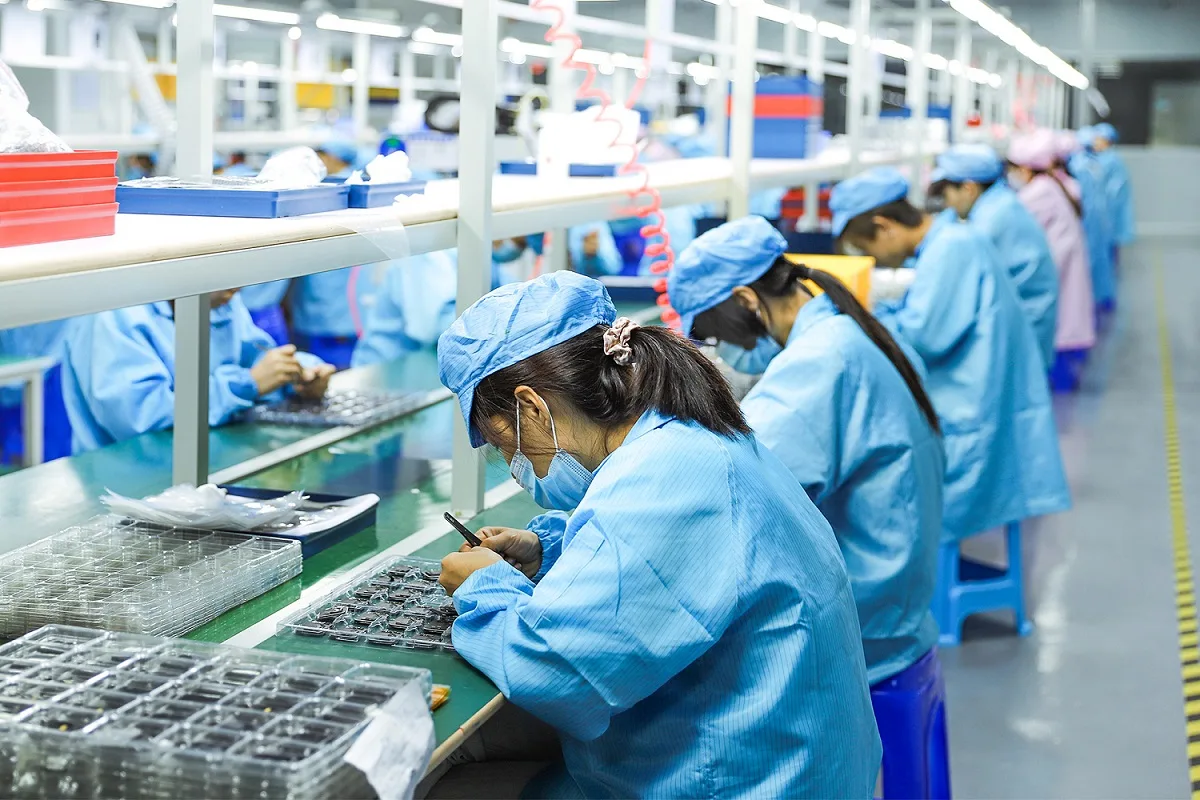
The Guangzhou production ecosystem is not passive in the face of cost pressure. As movement costs increase, Chinese manufacturers respond by optimizing usage — reducing waste in the assembly process, tightening quality control to reduce return rates and rework costs, and concentrating production resources on fewer, more consistently executed models rather than attempting to maintain a broad catalog across all quality tiers simultaneously.
There is also an accelerating longer-term response: increased investment in Chinese domestic movement development. The Seagull and Mingzhu caliber families have both seen meaningful technical improvement over recent years, partly driven by the incentive to reduce dependence on Japanese imports. These domestic calibers are not yet equivalent to Miyota-family movements in reliability and service infrastructure, but the gap has been narrowing — and sustained pressure from Japan-China tensions gives producers a structural reason to accelerate that investment. For buyers, this means that domestic-movement replica watches are worth evaluating more carefully than they were five years ago, particularly as Chinese caliber quality continues to develop.
What This Means for Replica Watch Buyers
In the short term, buyers should expect modest but real price increases on replica watches equipped with Japanese automatic movements — particularly well-regarded Miyota-family calibers. Availability of specific movement configurations may also narrow temporarily as producers manage inventory conservatively. Buyers who have been considering a specific model should factor in that waiting may mean paying more rather than waiting for a better price.
Over a longer horizon, the supply chain pressure is likely to produce a net-positive structural effect: producers who survive cost pressure do so by improving efficiency and tightening quality standards, not by lowering them. The models that continue to be produced under tighter margins tend to be the ones where component and assembly discipline is applied most consistently. The effect is a gradual quality floor increase across the market, as lower-margin, lower-quality production becomes less viable.
The practical guidance for buyers is unchanged regardless of geopolitical context: prioritize movement specification and verified construction quality over price comparison alone. A watch built around a reliably sourced caliber assembled with consistent standards will remain satisfying regardless of what happens to wholesale pricing. For guidance on evaluating movement quality before purchasing, see Miyota Movement and Clone Movement in the glossary.
Final Thoughts
The Japan-China situation is a useful reminder that global political dynamics reach into markets most people do not associate with geopolitics. The watches that buyers purchase through international platforms reflect decisions made in Guangzhou workshops, by movement distributors in Japan, and by procurement managers navigating trade risk in real time. Understanding that chain does not change what a buyer wants from a replica watch — but it does clarify why prices move, why availability shifts, and why some models become harder to source at consistent quality during periods of supply chain stress.
The replica watch market has adapted to supply chain disruptions before and will again. The producers and sellers who navigate these periods best are the ones with established sourcing relationships, genuine quality control discipline, and the flexibility to adjust production without sacrificing the construction standards their buyers depend on.
Related Glossary Terms
Miyota Movement · Seagull Movement · Mingzhu Movement · Clone Movement · Replica Watch Factory · Super Clone · QC (Quality Check) · Trusted Dealer (TD)
Frequently Asked Questions
Why do Japan-China tensions affect replica watch prices?
Because the most widely used movements in high-end grade replica watches — particularly Miyota-family Japanese automatics — are sourced from Japan and assembled in China. When political tension introduces uncertainty into that supply chain, suppliers raise prices preemptively to protect against anticipated disruption, and those cost increases pass through to wholesale and retail pricing.
Which replica watch movements are most affected by Japan-China supply chain issues?
Japanese automatic calibers — primarily the Miyota family — are most directly affected because they are sourced from Japan and imported into China for use in assembly. Watches using Chinese domestic calibers (Seagull, Mingzhu) are less exposed to cross-border supply chain disruption, though they may face separate cost pressures from domestic component markets.
Will replica watch quality decrease because of supply chain pressure?
Not necessarily — and often the opposite occurs. Producers under cost pressure tend to concentrate resources on fewer, more consistently built models rather than maintaining a broad catalog at lower margins. Quality control discipline tends to improve under cost pressure because defects and returns become more expensive to absorb. The risk is that lower-tier pieces may substitute cheaper domestic calibers, so movement specification becomes more important to verify than usual.
Are Chinese domestic movements a viable alternative to Miyota calibers?
Increasingly, yes — but with important caveats. The Seagull and Mingzhu families have improved meaningfully in recent years, particularly in modified versions used by quality-focused producers. They remain behind Miyota in terms of service infrastructure and global watchmaker availability. For buyers who service their watches locally, Miyota-equipped pieces remain the more practical choice; for buyers primarily concerned with performance rather than serviceability, quality domestic calibers are a reasonable consideration.
Should I wait to buy or buy now given current supply chain conditions?
Waiting for prices to fall in a supply-constrained environment is generally not a productive strategy — supply chain pressure tends to produce sustained price increases rather than temporary spikes that correct quickly. If a specific movement configuration or model is important to you, buying while it is available at current pricing is typically the better decision. The alternative risk is that the version you want becomes unavailable or meaningfully more expensive over the following months.