On this page 14 sections
Article at a glance
- Reading time
- 24 minutes
- Article length
- 5,177 words
Choose what you want to understand first
This guide explains how replica watches are produced and distributed — why batches vary, what "factory" claims mean, and how the market shapes consistency.
Guangzhou market (how sourcing works)
How the supply chain operates and why this market influences what buyers see online.
Open: Guangzhou market →Inside a high-quality replica
Materials, assembly, finishing — what "high quality" really means beyond listing photos.
Open: Inside a high-quality replica →Rolex quality levels (market view)
How tier language maps to real market variance and production consistency.
Open: Rolex quality (market) →Before you decide (risk control)
Buying framework (full process)
The complete step-by-step flow: expectations, tiers, movements, pricing, seller checks, and timelines.
Open: Full buying framework →Quality tiers (buyer view)
AAA vs super clone — what tiers realistically improve, and what they don't.
Open: Quality levels →Problems & care (ownership reality)
How build choices and movement type affect durability in real daily use.
Open: Owner guide →Prefer browsing this topic like a library? Open Manufacturing & Market Library →
Replica Watch Manufacturing & Market Explained is a detailed guide created to clarify how replica watches are actually made and how the replica watch market truly operates. While replica watches are often discussed in simplified or promotional terms, the reality behind their production and distribution is far more complex.
This page explores the real structure behind replica watch manufacturing, from component-level production and assembly coordination to market dynamics, pricing behavior, and availability. Rather than focusing on labels or speculation, it explains how the system works in practice.
By understanding how replica watches are actually made and how the market functions, buyers can move beyond surface-level claims, set realistic expectations, and evaluate watches based on construction quality, production intent, and long-term reliability rather than names or hype.
- How Replica Watches Are Actually Made
- There Is No Single Replica Watch Factory
- The Guangzhou–Dongguan–Shenzhen Production Network
- Why Case Quality Determines Everything
- Mold Ownership, Costs, and Price Fluctuations
- How the Replica Watch Market Really Operates
- Short-Term Appeal vs Long-Term Reliability
- Factory Names, Myths, and Market Labels
- Setting Realistic Expectations as a Buyer
- How This Knowledge Changes Buying Decisions
- Frequently Asked Questions
How Replica Watches Are Actually Made
When people imagine how replica watches are produced, they often picture a single factory manufacturing an entire watch from start to finish. In reality, the replica watch industry does not operate this way.
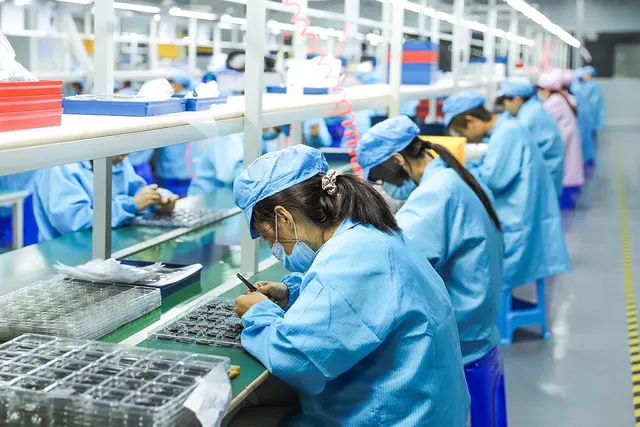
Replica watches are the result of a modular production system, where different components are manufactured by specialized suppliers rather than a single centralized factory. Cases, bracelets, dials, crystals, straps, and movements are typically produced by separate workshops — often located close to one another — before being assembled later.
This approach allows for speed, flexibility, and cost control, but it also means that quality is determined by coordination rather than branding.
Specialized Component Production
Each major component of a replica watch is handled by a specialist. Cases are produced by workshops focused on CNC machining, steel finishing, and polishing. Bracelets and straps come from suppliers specializing in metal links or leather processing. Dials are created by dial makers with experience in printing, texture application, and lume work. Crystals are supplied separately, often with different grades of sapphire or mineral glass. Movements are purchased as complete units, usually only after orders are confirmed.
Because these suppliers are geographically close, components can be tested, revised, and replaced quickly. This is why replica models often go through multiple versions in a short period of time.
There Is No Single Replica Watch Factory
One of the most persistent misconceptions in the replica watch market is the idea that a single factory produces a replica watch from beginning to end. In practice, there is no such thing as a fully self-contained replica watch factory.
Instead, production is coordinated by individuals or small teams who act as organizers rather than manufacturers. These organizers source components, fund tooling and molds, oversee assembly, and manage quality expectations.
Who Actually Builds the Watch?
Rather than producing every component internally, organizers typically obtain an original watch for measurement and reference, then pay for CNC programming and mold creation for the case. They select suppliers for dials, bracelets, crystals, and straps, purchase movements only when orders are confirmed, and assemble the final watch in offices or small workshops.
This structure explains why two watches that look similar on the surface can feel completely different in hand. The quality depends on choices made during sourcing and assembly, not on a factory name.
To see how this network shows up in real-world market behavior, read Guangzhou: The Heart of the Replica Watch World.
The Guangzhou–Dongguan–Shenzhen Production Network
The replica watch industry is not centralized within a single factory or city. Instead, it operates through a dense production network concentrated in southern China — primarily across Guangzhou, Dongguan, and Shenzhen. This regional clustering is not accidental. It is one of the key reasons replica watch production remains fast, flexible, and highly responsive to market demand.
Rather than functioning as isolated manufacturing centers, these cities form an interconnected ecosystem where specialized suppliers, organizers, and markets coexist within close physical proximity.
Geographic Proximity as a Competitive Advantage
One of the defining characteristics of this production network is distance — or rather, the lack of it. Case workshops, dial makers, bracelet suppliers, crystal producers, leather strap specialists, and movement distributors are often located within hours — or sometimes minutes — of one another. This proximity allows for rapid prototyping and revisions, quick replacement of faulty components, faster version updates, and lower logistical costs. In practical terms, a design change requested in the morning can often be tested or implemented within days rather than months.
Dongguan and Shenzhen: Component Specialization
Dongguan and Shenzhen are particularly important for component-level specialization. Dongguan is widely known for CNC machining, metal processing, and case manufacturing — many workshops there specialize exclusively in stainless steel finishing, polishing techniques, and precision tolerances. Shenzhen plays a major role in movement sourcing, electronics-related components, and higher-end machining services, and also supports auxiliary suppliers involved in tooling, measurement, and testing.
These cities are not replica-watch-exclusive. They serve multiple industries, which is precisely why their capabilities are so advanced. Replica watch production benefits from an existing industrial foundation rather than relying on isolated, purpose-built factories.
Guangzhou: Assembly, Coordination, and Market Access
While components are sourced across the region, Guangzhou functions as the coordination and distribution hub. Organizers typically assemble watches in offices or small workshops rather than large factories. Finished samples and reference pieces are often brought to Guangzhou's wholesale watch markets, where they are displayed, evaluated, and offered to buyers. This setup enables sample-based selling rather than mass inventory, on-demand assembly after orders are confirmed, and immediate market feedback. Instead of producing large quantities in advance, many replica watches are assembled only when demand exists — which reduces financial risk but also contributes to fluctuating availability.
Why This Network Enables Rapid Version Updates
The frequent release of updated versions — often labeled as V2 or V3 — can be confusing to buyers. However, within this regional network, updates are a natural outcome of how production is structured. Because molds, tooling, and suppliers are locally accessible, a case edge can be reworked, a dial font adjusted, or a bracelet tolerance tightened without restarting the entire production process. These updates are often incremental rather than transformative, but they reflect how quickly feedback circulates within the network.
Low Barriers to Entry, High Barriers to Consistency
This ecosystem also explains why entry into replica watch production is relatively accessible, while long-term consistency is much harder to achieve. Anyone with access to the right suppliers, sufficient capital for molds and tooling, and a small network of experienced contacts can coordinate production. However, maintaining consistent quality over time requires discipline, investment, and repeatable standards — something not all organizers prioritize. As a result, the market remains highly dynamic, with new names appearing frequently and others disappearing just as quickly.
Summary: A Network, Not a Factory
The Guangzhou–Dongguan–Shenzhen production network is best understood not as a traditional manufacturing chain, but as a modular ecosystem. Its strength lies in specialization, proximity, and flexibility rather than centralized control. This structure explains why availability fluctuates, why prices change over time, and why two visually similar watches can feel very different in hand. Understanding this network is essential before attempting to evaluate quality, pricing, or factory claims — topics that become much clearer in the next section.
Why Case Quality Determines Everything
After the movement, the case is the most expensive and labor-intensive component of a replica watch. It is also the part that immediately reveals the true intention behind a watch's production. Understanding case quality is one of the most reliable ways to assess overall build — and it connects directly to how replicas behave over time, a topic explored in more detail in our Replica Watch Water Resistance Guide.
Before a dial is examined, before a movement is discussed, and before branding or factory names are mentioned, the case speaks first. Its weight, balance, surface finishing, and edge transitions are felt instantly the moment the watch is held in hand. Unlike visual elements, these physical cues cannot be disguised for long.
The Case as the First Point of Truth
In real-world handling, a well-made case announces itself immediately. The distribution of weight, the solidity of the steel, and the precision of transitions between brushed and polished surfaces create a tactile impression that is difficult to fake.
For a component-level view of what buyers don't see in photos, read Inside a High-Quality Replica Watch: What You Don't See.
A poorly made case, on the other hand, feels hollow or unbalanced regardless of how impressive the dial may appear. Even high-quality printing, lume, or surface textures cannot compensate for weak case construction. This is why experienced buyers often judge a watch within seconds — before setting the time or inspecting fine details.
Why Case Manufacturing Requires the Most Investment
Case production demands more than materials alone. It requires CNC programming and precision machining, tooling and mold creation, multiple stages of polishing and surface treatment, and skilled labor to execute consistent finishing. The initial investment for molds and CNC tooling is significant. However, once these molds are paid for and retained, subsequent production runs become considerably cheaper — creating a unique economic pattern where prices can fluctuate over time not because quality has changed, but because tooling costs have already been absorbed. This dynamic explains why the same model may be offered at different prices across different periods.
Polishing Techniques and Steel Treatment Matter More Than Design
Two cases cut from identical drawings can feel entirely different depending on how the steel is treated. Polishing procedures vary widely between case manufacturers — differences in abrasives, polishing compounds, pressure, and sequence directly affect surface smoothness, edge definition, resistance to visible wear, and long-term durability. Steel quality itself also matters, as subtle differences in alloy composition influence how the material responds to polishing and how it ages over time. These variables are invisible in photos but unmistakable in hand.
Why a High-Quality Case Forces Everything Else to Improve
One of the most consistent realities in replica watch production is this: when a case is made to a genuinely high standard, it becomes difficult — often impossible — to justify using inferior components elsewhere. A well-finished case demands better bracelets to match weight and tolerances, more consistent assembly to avoid misalignment, and higher-grade movements that can support the overall build. In this sense, the case sets the ceiling for the entire watch. If the goal is not to produce the cheapest possible product, quality cascades outward from the case to every other component.
Short-Term Appeal vs Long-Term Use
Some replica watches are intentionally built for short-term visual appeal. These often combine lower-quality cases — sometimes using cheaper alloys — with attractive dials designed to impress quickly. Such watches may look convincing for weeks but tend to reveal weaknesses through daily wear: sharp edges, inconsistent finishing, loosening components, or rapid cosmetic degradation. In contrast, watches built around a strong case platform maintain their integrity over time. They age predictably, feel consistent on the wrist, and tolerate regular use far better.
How Experienced Buyers Read the Case Instinctively
For those familiar with replica watches, evaluating case quality becomes instinctive rather than analytical. Experienced buyers assess weight relative to size, the smoothness of transitions between finishes, the sharpness and consistency of edges, and the overall balance when worn. These cues do not require tools or measurements — they are felt rather than calculated. This is why case quality often determines whether a replica watch is viewed as a serious long-term piece or a disposable novelty.
The Case as a Statement of Intent
Ultimately, the case reflects the producer's intent. A well-executed case signals commitment, investment, and long-term thinking. A poorly executed one signals cost-cutting and short-term objectives. No amount of branding, factory naming, or marketing language can override this reality. Understanding case quality is therefore not just about assessing craftsmanship — it is about understanding the philosophy behind the watch itself.
Mold Ownership, Costs, and Price Fluctuations
Price instability is one of the most confusing aspects of the replica watch market. Buyers often notice that the same model can appear at significantly different price points over time, even when no obvious changes are visible. This behavior is frequently misinterpreted as inconsistency or manipulation, when in reality it is a direct result of how tooling and mold ownership work.
Understanding this dynamic requires looking beyond surface-level pricing and into the economics of production.
The High Cost of Initial Tooling and Mold Creation
Producing a replica watch case begins with a substantial upfront investment. CNC programming, precision tooling, and mold creation represent some of the highest fixed costs in the entire production process. These expenses are paid before a single watch is assembled. The initial run must therefore absorb these costs, which often results in higher early pricing. At this stage, prices reflect not only materials and labor, but also the financial risk taken by the organizer. Once molds are completed and retained, they become reusable assets rather than ongoing expenses.
Why Prices Drop After the First Production Runs
When a mold has already been paid for, subsequent production runs become significantly cheaper. The absence of tooling costs allows organizers to lower prices without reducing component quality. This explains why early versions of a model may be expensive, later versions become more affordable, and quality may remain largely unchanged throughout. From the outside, this can look like random price fluctuation. In reality, it reflects a shift from investment recovery to operational production.
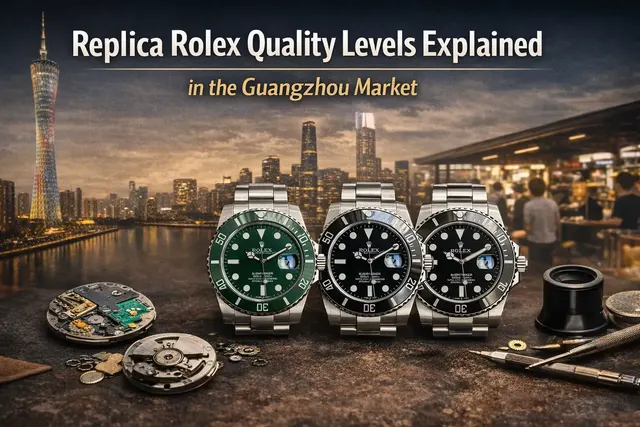
For a market-facing example of how tiers and pricing behave in practice, see Replica Rolex Quality Levels Explained: Inside the Guangzhou Market.
Mold Retention and Market Control
Who owns the mold matters. When an organizer retains control of a mold, they gain the ability to reproduce cases at lower marginal cost, respond quickly to renewed demand, and adjust pricing strategically. If a mold is lost, modified, or retired, restarting production requires a new investment cycle — often leading to sudden price increases or discontinuation of certain models. As a result, availability and pricing are closely tied to tooling decisions that are entirely invisible to end buyers.
How Mold Economics Shape Market Behavior
The replica watch market is not built around long-term production planning. Instead, it reacts dynamically to demand, capital availability, and tooling status. This leads to several observable behaviors: short production runs followed by pauses, price volatility despite stable demand, and multiple versions of the same model appearing over time. Rather than signaling instability, these patterns reflect a system optimized for flexibility rather than permanence.
Short-Term Products vs Long-Term Platforms
Some watches are designed as short-term offerings — they use cheaper case materials, avoid heavy tooling investment, and prioritize visual appeal over durability. Others are built as long-term platforms, justified by higher upfront tooling costs. These watches are more likely to maintain consistent quality, experience price reductions over time, and remain available across multiple production cycles. Understanding which category a watch belongs to is crucial for setting realistic expectations.
Why This Matters to Buyers
Without insight into mold economics, buyers may assume price changes indicate declining quality or unreliable sellers. In reality, pricing often reflects where a model is in its production lifecycle. Recognizing this allows buyers to avoid overpaying during early production phases, understand why prices normalize later, and interpret availability changes more accurately. Price behavior, when viewed through this lens, becomes a source of information rather than confusion.
How the Replica Watch Market Really Operates
At first glance, the replica watch market appears unstable. Models appear and disappear, prices fluctuate, factory names change, and availability is inconsistent. However, when viewed from within the production ecosystem, the market follows a clear and logical structure driven almost entirely by demand and cash flow rather than long-term inventory planning.
The replica watch market is not built around forecasting years ahead. It operates on reaction, flexibility, and speed.
Order-Driven Production, Not Inventory-Based Manufacturing
Unlike traditional watch brands, replica watch production rarely relies on large pre-built inventories. Instead, most watches are assembled after orders are placed. This approach exists for practical reasons: movements are expensive and often require upfront payment, storing completed watches ties up capital, and demand can shift rapidly between models. As a result, many organizers prefer to display samples, collect orders, purchase movements, and assemble watches on demand — which explains why availability can change suddenly, even for popular models.
The Role of Wholesalers in Shaping Demand
Contrary to common belief, the primary driver of production is not the end customer — it is the wholesaler. Wholesalers request specific models, influence production volume, and determine which variations are prioritized. Organizers respond to these signals rather than predicting individual consumer preferences. If wholesalers stop requesting a model, production slows or stops — even if retail interest still exists. This dynamic creates a market that responds upward, not downward.
Why Popular Models Are Reproduced Repeatedly
Certain replica models remain in production for extended periods. This persistence is not accidental — popular models justify tooling investments, maintain steady wholesale demand, and offer predictable returns. These watches often evolve through incremental updates rather than full redesigns, reinforcing their presence in the market. Less popular models may disappear entirely, not due to quality issues, but because they no longer align with demand.
Market Liquidity and Constant Movement
The replica watch market is highly liquid. Capital flows quickly, and production adapts accordingly. This liquidity results in frequent new releases, rapid version updates, and constant turnover of names and labels. Because barriers to entry are relatively low for those with the right contacts and capital, new participants regularly enter the market — while others exit just as quickly. This keeps the ecosystem dynamic but inconsistent in appearance.
Why Stock Shortages Are Common
Stock shortages are not always signs of popularity or scarcity. Often, they reflect temporary pauses in assembly, delays in movement sourcing, or shifts in wholesale demand. Since many watches are built only after orders are confirmed, stock levels fluctuate naturally. Understanding this prevents misinterpretation of "out of stock" signals.
A Market Optimized for Speed, Not Stability
Ultimately, the replica watch market prioritizes speed over stability. It is designed to respond quickly rather than maintain long-term consistency. This benefits buyers who understand timing, while confusing those who expect traditional retail behavior. Recognizing this difference is essential for navigating the market effectively.
Short-Term Appeal vs Long-Term Reliability
Not all replica watches are built with the same intention. Some are designed to attract attention quickly, while others are built to remain reliable and consistent over time. Understanding the difference between short-term appeal and long-term reliability is essential for setting realistic expectations. This distinction is rarely discussed openly, yet it defines how a replica watch will behave after weeks, months, or years of use.
Watches Built for Short-Term Appeal
Short-term oriented replica watches prioritize visual impact over structural integrity. These models often look convincing at first glance, especially in photographs or initial handling. They typically use lower-grade case materials or thinner steel, simplified polishing and finishing, and attractive dials that compensate for weaker construction, with reduced investment in tooling and molds. These watches are not necessarily the result of poor craftsmanship, but rather intentional cost decisions — often produced in response to temporary demand or aggressive price targets set by wholesalers. In many cases, their appeal fades as wear reveals inconsistencies such as sharp edges, loosened components, or accelerated cosmetic degradation.
Watches Built as Long-Term Platforms
Long-term replica watches follow a fundamentally different approach. These models are built around a strong case foundation and justify higher initial investment in tooling and finishing. They feature heavier, well-balanced cases, more consistent tolerances, better integration between case, bracelet, and movement, and slower cosmetic wear over time. Because these watches require greater upfront cost, they are often introduced at higher price points. Over time, as tooling costs are recovered, pricing may stabilize or even decrease while quality remains consistent. These models are more likely to receive incremental updates rather than being replaced entirely.
Why the Difference Becomes Obvious Over Time
The gap between short-term and long-term watches widens with use. Short-term watches tend to feel lighter or less balanced over time, develop visible wear faster, and require more frequent adjustments or repairs. Long-term watches, by contrast, age more predictably, maintain consistent wrist feel, and require fewer interventions. This divergence is not always apparent at purchase, but becomes clear through daily use.
For practical ownership habits that protect long-term wear, use our Replica Watch Problems & Care: Complete Owner Guide.
How Buyers Can Identify the Difference Early
While no single indicator guarantees longevity, experienced buyers often look for early signals: case weight relative to size, smoothness of edges and transitions, bracelet articulation and tolerance, and overall balance when worn. These physical cues are difficult to fake and often reveal whether a watch is intended as a disposable product or a durable platform.
Why This Distinction Matters
Confusion arises when buyers expect long-term performance from a watch designed for short-term appeal. Understanding intent prevents disappointment and reframes expectations. Recognizing whether a model is built to impress briefly or endure over time allows buyers to make informed choices aligned with their priorities.
Factory Names, Myths, and Market Labels
Factory names play a central role in how replica watches are discussed online. Buyers often associate these names with quality tiers, consistency, or long-term reliability. In practice, however, factory names function more as labels than as true manufacturing identities. Understanding what these names represent — and what they do not — is critical for navigating the replica watch market realistically.
What a "Factory" Actually Represents
In the replica watch ecosystem, a factory name rarely refers to a single, vertically integrated manufacturer. Instead, it usually represents an organizer or coordinating group, a sourcing strategy rather than a production facility, and a label attached to a specific combination of components. The same organizer may release multiple models under one name, discontinue it, or later introduce another name without any fundamental change in production approach.
How Factory Names Are Created
Factory names often emerge informally — derived from initials or nicknames of organizers, lucky numbers, symbols, or abbreviations, or names chosen by sellers for differentiation purposes. In many cases, the seller — not the producer — assigns or popularizes the factory name. Once a label gains traction, it is reused until it loses relevance or is replaced by another. This fluid naming practice explains why new factory names appear frequently while older ones fade without explanation.
Why Factory Names Change So Often
Factory names change not because production suddenly improves or declines, but because market attention shifts, sellers rebrand their offerings, or organizers restructure their sourcing. Renaming allows sellers to reset expectations, highlight updates, or distance a product from earlier versions. However, this does not automatically indicate a meaningful change in quality.
The Risk of Treating Factory Names as Guarantees
One of the most common mistakes buyers make is assuming a factory name guarantees consistency. In reality, the same name may represent different quality levels over time, different sellers may use the same name for similar but non-identical watches, and production choices can evolve without any public signal. Relying solely on factory names obscures more meaningful indicators such as case quality, finishing, and assembly consistency.
What Actually Matters More Than Names
Experienced buyers tend to focus less on names and more on tangible factors: case construction and finishing, bracelet quality and tolerances, movement selection and integration, and overall balance and feel. These elements remain far more reliable indicators of quality than any label attached to a watch.
Why the Market Continues to Use Factory Labels
Despite their limitations, factory names persist because they serve practical purposes — simplifying communication, grouping similar offerings, and creating reference points for discussion. When used cautiously, they can be helpful shorthand. When treated as guarantees, they become misleading.
Understanding Factory Names in Context
Factory labels should be viewed as contextual references, not definitive markers. They describe how a watch is positioned within the market at a given time — not what it will always be. Once buyers understand this, they are better equipped to evaluate watches based on substance rather than branding.
Setting Realistic Expectations as a Buyer
One of the biggest sources of frustration in the replica watch market is not poor quality — it is misaligned expectations. Many disappointments occur not because a watch fails outright, but because buyers expect it to behave like something it was never intended to be. Understanding how replica watches are produced, priced, and distributed fundamentally changes what should — and should not — be expected.
What Replica Watches Are Designed to Deliver
Replica watches are designed to offer visual similarity to original designs, functional timekeeping, and a tangible wearing experience. They are not designed to match original watches in every material detail, follow luxury-brand quality control standards, or maintain permanent consistency across long production cycles. Once this distinction is clear, evaluating a replica watch becomes more grounded and objective.
Why Expectation Gaps Occur
Expectation gaps often arise from marketing language rather than technical explanation, overemphasis on factory names, and comparing replicas directly to genuine luxury watches. These gaps are amplified when buyers rely solely on photos or labels instead of understanding how the product is actually made. Education reduces disappointment far more effectively than chasing "the best version."
Understanding Risk Without Fear
Replica watches involve certain realities: version updates may change small details, availability can fluctuate, and long-term support depends on production cycles. These are not hidden dangers — they are structural characteristics of the market. Recognizing them allows buyers to assess risk calmly rather than emotionally.
Why Knowledge Is the Strongest Protection
Buyers who understand case quality indicators, mold economics, and market behavior are far less likely to make impulsive decisions or misinterpret normal market behavior as red flags. In this sense, knowledge acts as a filter — eliminating noise and focusing attention on what truly matters.
Adjusting Expectations Improves Satisfaction
When expectations align with reality, small imperfections are contextualized, price changes make sense, and product lifecycles feel predictable. Satisfaction becomes a function of understanding rather than surprise.
If you're ready to move from research to a structured purchase plan, start with our complete buying framework.
How This Knowledge Changes Buying Decisions
Understanding replica watch manufacturing and market dynamics does more than inform — it changes how buyers make decisions. Instead of reacting to surface-level signals, informed buyers approach purchases with structure, patience, and perspective.
From Labels to Fundamentals
Buyers who grasp how the market works shift their focus away from factory names and hype-driven releases, and toward construction quality and intent. Rather than asking which factory made a watch, they ask how the case is built, what movement is used, and whether the overall assembly reflects genuine investment. This shift leads to more consistent outcomes and fewer regrets.
Timing Matters More Than Urgency
Knowledge replaces urgency with timing. Understanding production cycles helps buyers avoid early pricing spikes, recognize when a model has stabilized, and interpret availability signals accurately. Impulse purchases give way to informed choices.
Evaluating Information More Critically
With a clearer framework, buyers can identify exaggerated claims, separate cosmetic updates from structural changes, and ask better questions before committing. This critical lens applies not only to sellers, but also to forums, reviews, and community discussions.
Connecting This Guide to Other Learning Paths
This pillar is designed to work alongside other guides. Buying Guides explain how to approach purchases step by step. Legal & Safety content clarifies risk and compliance. Problems & Care focuses on ownership realities. Knowledge articles deepen technical understanding. Together, these resources form a complete learning ecosystem.
Related Glossary Terms
Replica Watch Factory · Clone Movement · Miyota Movement · Mingzhu Movement · Seagull Movement · Super Clone · QC (Quality Check) · ARF Factory · Noob Factory · Case Thickness · Ceramic Bezel
Final Perspective: Understanding Over Perfection
Replica watches are not about perfection. They are about understanding trade-offs — between cost, quality, availability, and intent. Buyers who approach the market with this mindset gain clarity, confidence, and control over their decisions.
Replica Watch Manufacturing & Market — Frequently Asked Questions
How are replica watches actually manufactured?
Replica watches are produced through a modular system where cases, dials, bracelets, crystals, and movements are made by specialized suppliers and later assembled, rather than in a single factory.
Is there one factory that makes an entire replica watch from start to finish?
No. There is no single factory that produces a replica watch entirely. Production is coordinated by organizers who source parts from multiple workshops and oversee final assembly.
Why are replica watch manufacturers concentrated around Guangzhou, Dongguan, and Shenzhen?
This region offers dense access to specialized suppliers, CNC machining, movement sourcing, and assembly services, allowing fast production, revisions, and lower logistical costs.
Why does case quality matter more than other components in a replica watch?
After the movement, the case requires the highest investment and labor. Its weight, finishing, and balance immediately reveal the overall quality and intent behind the watch.
Why do replica watch prices fluctuate even when the model looks the same?
Price changes often result from tooling and mold costs. Once molds are paid for, production becomes cheaper, allowing prices to drop without reducing quality.
How does the replica watch market actually operate?
The market is demand-driven and order-based. Most watches are assembled after orders are placed, rather than produced as large pre-built inventories.
What is the difference between short-term and long-term replica watches?
Short-term watches prioritize visual appeal and lower cost, while long-term watches are built around higher-quality cases and components designed for durability and consistent use.
What do factory names really mean in the replica watch market?
Factory names are labels used to group similar products. They do not represent vertically integrated manufacturers and should not be treated as quality guarantees.
How should buyers set realistic expectations when researching replica watches?
Buyers should understand that replica watches aim for visual similarity and functionality, not perfect replication or luxury-brand standards, and that availability and versions can change over time.
How does understanding manufacturing and market structure help buyers make better decisions?
This knowledge allows buyers to evaluate quality beyond labels, understand pricing behavior, avoid hype-driven choices, and make more informed, confident decisions.