On this page 16 sections
Article at a glance
- Reading time
- 11 minutes
- Article length
- 2,350 words
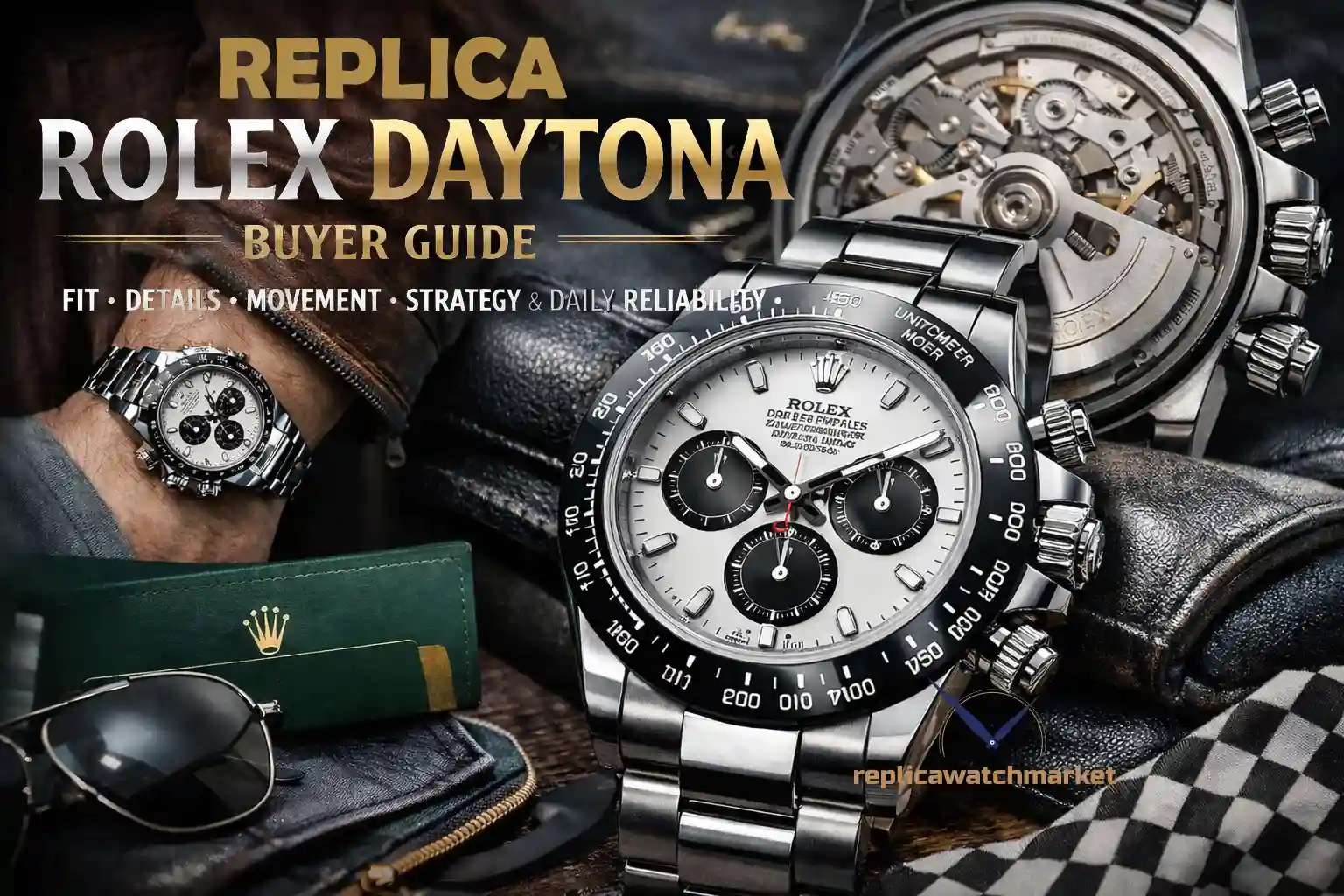
The Daytona-style silhouette is one of the most recognizable sports-luxury profiles in modern watch culture. In replica buying, that recognition creates a simple challenge: many buyers expect a "perfect chronograph experience" because the genuine Daytona is a chronograph icon — but the best replica ownership outcomes usually come from setting expectations correctly and buying with a daily-wear strategy.
This guide covers how the Daytona wears in practice, what details actually matter in QC photos, what a Japan Automatic movement strategy means for daily reliability, and how to avoid the most common mistakes that lead to disappointment. Both the everyday-friendly automatic route and the super clone approach are covered so you can make a clear decision between them.
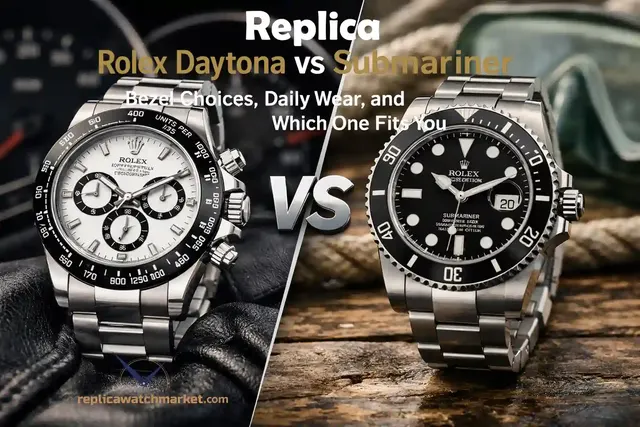
If you are new to Rolex replicas generally, the complete Rolex replica buyer guide covers model positioning, quality tiers, and sizing logic across the full lineup. To compare the Daytona specifically against the Submariner, see the Daytona vs Submariner comparison. If you want to skip straight to available options, browse the Replica Rolex Daytona collection.
What Daytona Means in Replica Buying
In genuine watch terms, Daytona equals chronograph heritage. In replica buying terms, Daytona most often means a dial layout people associate with premium status, a bezel profile that reads "expensive" from across the room, a bracelet and case shape that photographs well, and a statement watch that many buyers wear daily without ever using the timing functions. That is why this guide anchors its strategy around Japan Automatic — a reliability-first approach that focuses on a steadier day-to-day ownership experience rather than chasing mechanical complexity for its own sake.
If your top priority is frequent chronograph use and perfect reset behavior, read the movement and super clone sections carefully and consider whether the Daytona-style replica is actually the right choice for your use case.
Who a Japan Automatic Daytona Build Suits Best
The Japan Automatic strategy fits three buyer profiles particularly well. The first is the daily wear, low-drama buyer — someone who wants a Daytona look for work, dinner, and weekends without obsessing over delicate chronograph mechanics. The second is the looks-first buyer whose priority is dial cleanliness, bezel alignment, and overall wrist presence, and who will use the pushers rarely if at all. The third is the value-tier decision maker who wants a strong visual result without paying for claims that don't translate into daily reliability.
Size & Fit Reality: It's Not Only "40mm"
Daytona-style replicas are often described simply as "40mm," but real-world fit depends on several proportions working together: lug-to-lug length determines the true wrist footprint, thickness determines how high the watch sits and whether it feels top-heavy, bracelet taper and clasp bulk affect comfort and perceived refinement, and case shoulder shape can change perceived size independent of diameter. For an online purchase, matching thickness feel and clasp bulk to a watch you already wear comfortably is more reliable than fixating on diameter alone.
Fit Cheat-Sheet
| Wrist Range | Wear Preference | What to Prioritize |
|---|---|---|
| 14.5–16.0 cm | Cleaner, flatter wear | Lower thickness + comfortable clasp |
| 16.0–17.5 cm | Balanced daily | Overall alignment + bracelet finishing |
| 17.5–19.0+ cm | Bold presence | Slightly thicker builds can work if bracelet is stable |
Thickness: The Quiet Dealbreaker
Thickness is the most underestimated factor in Daytona-style replica satisfaction. Even when diameter is exactly right, excessive thickness can make a watch feel top-heavy, awkward under shirt cuffs, less premium on the wrist, and fatiguing after long wear. If you want a Daytona-style watch that feels comfortable rather than imposing, prioritizing the most balanced thickness available has a bigger impact on daily satisfaction than most buyers realize before purchase.
| Thickness Feel | Wear Impression | Best Use Case |
|---|---|---|
| ~12mm | Refined, clean | Office wear, daily comfort |
| ~13–14mm | Sporty, present | Most wrists, everyday casual |
| ~14.5mm+ | Bold, chunky | Statement wear, larger wrists |
Dial & Subdials: What to Check (and What Not to Overthink)
Daytona-style dials attract scrutiny because the layout is familiar to a wide audience. Your assessment should be layered — separating the non-negotiable checks from the details where realistic expectations matter more than perfection. For a full technical foundation on dial quality evaluation, see the Replica Watch Dial Guide.
Layer 1: Non-Negotiable Checks
Index alignment around the dial, sharp printing with no fuzzy text edges, central hand alignment both straight and centered, and consistent spacing across text, markers, and subdial rings are all non-negotiable quality signals. Any unit that fails these checks should be rejected regardless of other qualities.
Layer 2: Subdials — Be Realistic
Because this guide anchors on Japan Automatic, subdial functionality varies across builds. Your goal when evaluating QC photos is visual cleanliness rather than confirmed timing function. Look for symmetrical placement, clean circles and crisp printing, and subdials that feel proportionately balanced relative to the indices. Avoid builds with uneven subdial sizing, visibly off positioning, sloppy subdial hands, or rough printing — these are production quality signals, not minor cosmetic details.
Bezel & Tachymeter: Alignment Beats Material
Whether ceramic-style or steel-style, the bezel should look centered and intentional. Alignment is the real quality tell — a misaligned bezel at 12 o'clock is immediately visible and impossible to un-see. The tachymeter text should be evenly spaced with numerals that don't drift around the ring. For a full breakdown of bezel types, insert materials, and what to evaluate in QC photos, see the Replica Watch Bezel Guide.
| Bezel Type | Pros | Cons | Best For |
|---|---|---|---|
| Ceramic-style | Modern premium look | Misalignment shows instantly; scratches stand out | Bold, photo-friendly aesthetic |
| Steel-style | Classic, easier to live with over time | Less dramatic in photos | Understated daily wear |
Movement: Japan Automatic — What It Actually Means
A Daytona-style replica built around a Japan Automatic movement is primarily about daily reliability and a predictable ownership experience. It behaves like a normal automatic daily watch — steadier ownership for buyers who are not constantly using the pushers, an easier set-and-wear lifestyle than highly complex alternatives, and less mechanical drama for buyers who want the Daytona look first and timing function second. What it does not offer is genuine-level chronograph pusher feel, perfect reset snap every time, or guaranteed full chronograph tool behavior across every build in this style category. You are buying the Daytona silhouette with a practical daily movement strategy — not a precision timing instrument. For a full comparison of movement types across replica tiers, see the Replica Watch Movements guide.
Japan Automatic vs Super Clone Daytona: What Changes (And What It Costs You)
Some buyers specifically search for a super clone Daytona because they want a more realistic chronograph experience — working start/stop behavior, cleaner reset action, and subdials that behave closer to a true timing tool. That is a valid goal, but it changes the ownership profile significantly. The core difference in one line: Japan Automatic gives you Daytona look plus steadier daily ownership; super clone gives you more chronograph realism plus higher sensitivity and maintenance expectations.
| Feature | Japan Automatic | Super Clone Daytona |
|---|---|---|
| Core goal | Daily wear stability | Chronograph realism |
| Pusher use | Best kept light | Designed for more real chrono behavior, but still sensitive |
| Subdials | Can vary by build | Usually aims for more functional behavior |
| Ownership risk | Lower | Higher (more moving parts, tighter tolerances) |
| QC importance | High | Very high |
| Maintenance expectation | Basic habits | More likely to need regulation or service over time |
| Best for | "Wear it daily" buyers | "I want a working chrono" buyers |
If you mainly want the Daytona silhouette and will rarely use the chronograph, Japan Automatic is usually the safer, simpler ownership route. If functional chronograph behavior is your primary goal, a super clone strategy can make sense — but accept the higher QC and maintenance expectations before committing.
Chronograph Controls: Practical Rules for Daily Owners
Even if your Daytona-style replica includes functioning pushers, the safest daily-use mindset is consistent and conservative. Use pushers lightly rather than constantly, never operate them when the watch is wet, always stop the chronograph fully before resetting, and avoid habitual fidget-clicking — it is one of the most common causes of early mechanical issues in chronograph replicas regardless of quality tier.
Durability: What Usually Causes Problems
Most replica issues come from predictable behavior rather than random bad luck. The most common causes of damage are drops and hard impacts (tile floors, gym bag knocks), water mistakes (steam, showers, swimming assumptions), magnet exposure from speakers, laptop magnets, and tablet cases, sweat and grime buildup in the bracelet and crown area, and zero care habits sustained over months. For a full breakdown of the most common problems and how to prevent them, see the Common Replica Watch Problems guide.
The habits that pay off most are simple: wipe down the case and bracelet after sweaty days, keep fragrance and chemicals away from the case, store away from magnetic sources, and clean the bracelet periodically to prevent grime buildup in link joints.
Water Use: Conservative Guidance
Daytona-style replicas look like sports watches, so buyers often assume they can be treated like one. The safest practical approach is consistently conservative: treat as splash-resistant unless specifically tested and sealed, avoid showers and steam environments, avoid swimming, and never operate pushers when wet. Chronograph pushers significantly increase water intrusion risk compared to a non-pusher crown — this is the most important water-use distinction for Daytona owners versus Submariner owners. If water resistance is important to your daily routine, a sport model without chronograph pushers is a more forgiving primary watch; the Daytona-style piece works best as a dry-use statement watch. For full guidance on water resistance in replica watches, see the Replica Watch Water Resistance Guide.
QC Checklist: The 12-Point Buyer Test
Use this checklist to evaluate QC photos before confirming dispatch. It covers the most common visual quality signals and red flags across Daytona-style builds at every tier.
| Check | What "Good" Looks Like | Red Flag |
|---|---|---|
| Dial text | Crisp, even thickness | Fuzzy edges, uneven spacing |
| Indices | Uniform alignment | One or more indices tilted |
| 12 alignment | Bezel and dial align cleanly | Visible offset at 12 |
| Central hands | Straight, centered | Crooked chrono or seconds hand |
| Subdials | Symmetrical, clean circles | Floating look, sloppy printing |
| Bezel numerals | Evenly spaced | Drift or inconsistent spacing |
| Rehaut (if present) | Centered and clean | Engraving looks off-center |
| Crown seating | Straight, flush | Tilted or gappy crown |
| Pushers | Symmetrical seating | One side higher or oddly positioned |
| Bracelet finish | Consistent brushing and polish | Random dull patches, poor transitions |
| Clasp close | Flush, aligned | Gap or misalignment |
| General symmetry | Balanced overall | "Something feels off" on first look |
Recommended Colorways by Buyer Type
Choose a colorway you will actually wear regularly, not only one that looks striking in photos. A dial that photographs boldly but clashes with your everyday wardrobe becomes a watch that stays in the drawer. The table below maps buyer intent to the most practical color direction.
| Buyer Type | Best-Fit Color Direction | Why It Works |
|---|---|---|
| Daily wear, low drama | Black or neutral dial + clean bezel | Most versatile, easiest to pair daily |
| Office + smart casual | Understated tones, minimal flash | Reads refined in everyday professional settings |
| Statement weekend | Brighter contrasts, more presence | Strong wrist impact, photo-friendly |
| Value-first | Simple layouts, fewer complex details | Fewer alignment pitfalls, cleaner overall look |
Common Buyer Mistakes (and How to Avoid Them)
| Mistake | What Happens | Prevention |
|---|---|---|
| Buying for specs, not wear | Ends up uncomfortable | Prioritize thickness and clasp comfort |
| Expecting gen-level chrono | Disappointment | Anchor on Japan Automatic expectations |
| Ignoring bezel alignment | Obvious visual flaw | Use the 12-point QC checklist every time |
| Treating it like a swim watch | Water damage | Conservative water rules, never use pushers wet |
| Overusing pushers | Early mechanical issues | Light pusher use as default habit |
| Skipping basic cleaning | Bracelet grime and accelerated wear | Wipe down regularly, periodic bracelet clean |
When You Should NOT Buy a Daytona-Style Replica
Consider alternatives if you want a true timing tool you will use daily, you need confident water resistance as part of your routine, you dislike thickness or top-heavy feel on the wrist, or you want a set-it-and-forget-it durability profile above all else. For many buyers, a Submariner-style daily sports profile or a GMT-style travel watch is a more forgiving first purchase — see the Daytona vs Submariner comparison if you are choosing between these two references.
Frequently Asked Questions
Is a replica Rolex Daytona good for daily wear?
Yes — if you treat it as a style-first sports watch and keep usage conservative. A Japan Automatic strategy is usually the steadier daily ownership route for buyers who want the Daytona silhouette without managing complex chronograph mechanics.
What does "Japan Automatic" mean in practice?
It means you are prioritizing a predictable automatic daily-wear experience rather than chasing complex chronograph behavior. The movement is stable and reliable for everyday timekeeping; it is not optimized for frequent timing function use.
Do all Daytona-style replicas have a fully working chronograph?
No. Some builds prioritize the visual result over true chronograph tool behavior — pushers may be present but function inconsistently or not at all. That is why expectation setting and QC photo checks matter before confirming a purchase.
What are the biggest red flags on a replica Rolex Daytona?
Subdial layout that looks off-center or poorly proportioned, bezel misalignment at 12, fuzzy or uneven dial printing, and crooked central or subdial hands are the most reliable visual quality signals. Any of these present in QC photos warrants rejection.
Can you swim or shower with a replica Rolex Daytona?
Not recommended. Treat the watch as splash-resistant unless it has been independently pressure-tested. Avoid steam environments and never operate the pushers when wet — chronograph pushers are a significantly higher water intrusion risk than a standard screw-down crown.
What is the fastest way to judge quality from QC photos?
Use the 12-point checklist: alignment at 12, index uniformity, printing sharpness, subdial symmetry, hand positioning, bracelet finish consistency, and clasp fit reveal most quality tier signals quickly. A unit that passes all 12 checks is a low-risk purchase; one that fails two or more is worth rejecting.
What is a "super clone Daytona" in replica buying?
It refers to Daytona-style replicas that aim for more realistic chronograph behavior — functional start/stop/reset action and more active subdials. In return, they tend to be more mechanically sensitive and require stricter QC evaluation and better long-term ownership habits compared to Japan Automatic builds.