On this page 9 sections
Article at a glance
- Reading time
- 4 minutes
- Article length
- 850 words
Customs risk should be considered before an international replica-watch order is placed. Import rules, trademark enforcement and the treatment of personal shipments vary by destination and can change. This guide is a pre-purchase framework: it helps you identify the questions to research, understand what a seller cannot guarantee and decide whether the potential financial and legal consequences are acceptable to you.
This is general information, not legal advice. Use the official customs and government sources for your destination, and obtain independent legal advice when you need guidance about your circumstances.
Start with the destination, not the seller
The receiving country controls admission of the parcel. A seller or carrier cannot override local law or promise that customs will release a shipment. Before ordering, look for current guidance on the destination customs authority's official website. Check restricted or prohibited goods, intellectual-property rules, import taxes, personal-import limits and the process used when an item is detained.
Do not treat forum anecdotes or a previous successful delivery as a substitute for current official information. Screening practices, documentary requirements and enforcement priorities can differ between countries and can change without notice.
A pre-order risk checklist
- Legality: confirm whether purchase, possession and import are treated differently in your jurisdiction.
- Financial exposure: decide whether you can accept loss of the item and shipping cost if it is refused, detained or destroyed.
- Seller terms: read the written shipping, reshipment, refund and return terms before sending money.
- Documentation: keep the product page, order conversation, payment record and tracking number.
- Quantity: understand that multiple units may be assessed differently from a single personal purchase.
- Carrier process: use the carrier's official tracking and support channels; no route is guaranteed to clear customs.
Possible outcomes are broader than delivery or seizure
An international parcel may be released without delay, held while documents are reviewed, assessed for tax or duty, returned to the sender, confiscated, or become subject to a formal notice. The available outcomes and the recipient's rights depend on local rules. A tracking pause by itself does not prove seizure, and a seller cannot reliably predict the decision from a scan message alone.
Claims to treat cautiously
Statements such as “customs-proof,” “zero seizure risk” or “guaranteed clearance” are not credible. Customs decisions are made by public authorities. Likewise, there is no universal seizure rate that can be applied to every country, carrier and date. Ask instead what the seller's written policy says if delivery fails and which evidence is required for a claim.
Records worth keeping
Save the exact product URL and SKU, the agreed price, the full order message, proof of payment, the dispatch date, carrier name and tracking number. These records do not guarantee a result, but they give you a clear timeline if the parcel later needs to be traced or if you must compare the event with the seller's published terms.
Make a deliberate decision
The useful question is not whether customs risk can be eliminated; it cannot. The question is whether the current destination rules, the seller's written terms and your own tolerance for loss make the order acceptable. If the legal position is unclear or the potential consequence is unacceptable, do not proceed until you have reliable local guidance.
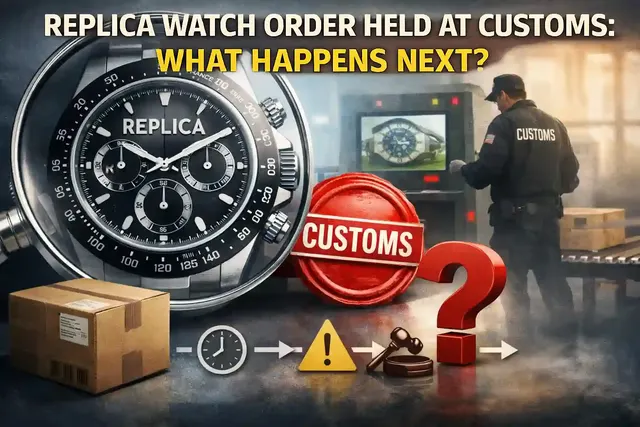
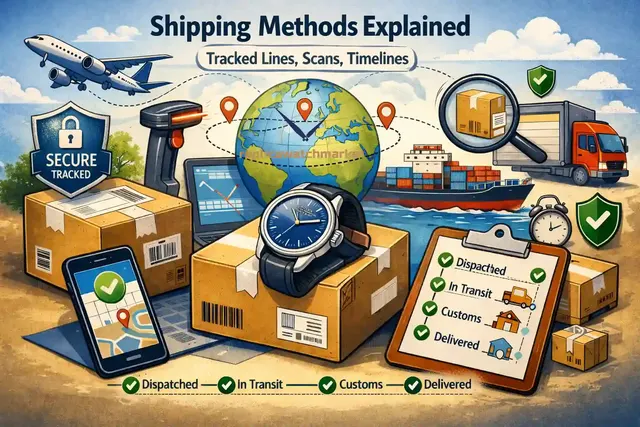
If an existing shipment already shows a customs-related tracking event, use the separate incident guide: Replica Watch Order Held at Customs: What Happens Next?. For the broader fulfilment sequence, see Shipping & Delivery.
How to check an official customs source
Start with the customs or border authority for the destination country. Confirm that the page is on an official government domain, note its update date and search for rules on restricted goods, intellectual property, duties and postal imports. If the guidance links to a formal notice or legislation, read that source rather than relying on a search-result summary.
Then compare the official process with the seller’s written terms. A policy can explain what the seller will do after a failed delivery, but it cannot change the authority’s powers or guarantee admission. Save a copy of both sets of information as they appeared when you ordered.
Customs-risk questions
Does a tracking delay mean a parcel was seized?
No. A gap can reflect transport, hand-off or routine processing. Use the carrier’s official record and wait for a formal status or notice before drawing a conclusion.
Can past deliveries predict the next order?
No. They may describe earlier experience, but rules, screening and carrier routes can change. Assess the next purchase using current destination guidance and the exact order terms.
What should a seller’s customs policy explain?
It should state what evidence is required, when a parcel is considered delayed or lost, and whether any refund or reshipment condition applies. Also check whether deadlines run from dispatch, the first tracking event, a formal carrier decision or your original contact date. Ambiguous promises are not a substitute for written terms.
Official sources and jurisdiction note
Import restrictions, notices, seizure procedures and recipient rights are jurisdiction-specific. The sources below are starting points; they do not replace destination-specific legal advice.