On this page 7 sections
Article at a glance
- Reading time
- 11 minutes
- Article length
- 2,205 words
Germany has one of the most developed watch cultures in Europe. The Glashütte watchmaking region in Saxony, home to A. Lange & Söhne, Glashütte Original, and Nomos, has shaped a national appreciation for engineering precision, balanced dial design, and quiet sophistication that prioritizes function over visible branding. This cultural foundation directly influences how German buyers evaluate any watch — including replica timepieces inspired by Swiss icons.
Rather than chasing logos or visual loudness, buyers in Germany tend to focus on proportion, dial legibility, case finishing, and how a watch wears across both professional and casual settings. Replica watches that respect these standards are considered seriously; those that fail them are quickly dismissed.
This guide covers what German buyers commonly consider when exploring replica watches online in 2026: popular design categories, what to check on the movement side, how international shipping to Germany works in practice, and how the ordering process compares to any other international purchase. For the broader framework that applies regardless of destination country, see our complete guide on how to buy a replica watch online safely, or start with the foundational replica watch guide if you are new to the category entirely.
German Watch Culture: A Quick Context
To understand why replica watches resonate with a specific group of buyers in Germany, it helps to start with the country's own watchmaking identity. Glashütte, a small town in Saxony, has been the center of German high-end watchmaking since the mid-19th century. The visual language associated with this tradition — three-quarter plates, hand-engraved balance cocks, blued screws, restrained dial layouts, and visible craftsmanship — has shaped how German buyers read a watch at a glance.
Three brands in particular define the modern German horological identity. A. Lange & Söhne, revived in 1990 after reunification, represents the high-complication end with watches priced from €25,000 well into six figures. Glashütte Original sits in the upper-mid range with classical complications and traditional finishing. Nomos Glashütte, founded in 1990, brought a clean Bauhaus-influenced aesthetic to mechanical watchmaking at more accessible price points, and has become especially popular among younger German buyers and architects.
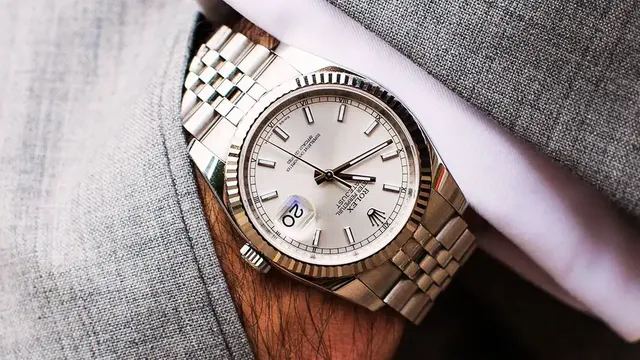
What this means in practice: a buyer in Munich, Hamburg, or Berlin looking at a watch tends to evaluate it against an inherited standard of clean engineering rather than visual loudness. Subtle dials, balanced case proportions, the quality of the bracelet, and the absence of unnecessary ornamentation all register as quality signals. This applies whether the watch is a €40,000 Lange Datograph or a replica of a Rolex Datejust on a Jubilee bracelet.
Replica watches that fail this evaluation — bezels sitting unevenly, dials with mismatched typography, bracelets that rattle when moved — are dismissed quickly by buyers in this market. The replicas that hold up to scrutiny are those that respect the same proportions, finishing logic, and dial coherence that buyers already use to evaluate any timepiece in a watchmaker's window in Frankfurt or Düsseldorf.
Why German Buyers Consider Replica Watches
Rising prices on Swiss icons — Rolex Submariner, Patek Philippe Nautilus, Audemars Piguet Royal Oak — combined with multi-year waitlists at authorized dealers across Germany, have pushed many buyers to look for alternatives. The reasons for considering a replica watch in 2026 tend to fall into three distinct categories:
Heritage appreciation without long-term commitment. A buyer interested in the design history of the Royal Oak or the Submariner can experience those designs on the wrist without committing to a five-figure purchase. For collectors who are still building genuine knowledge of Swiss design language, replicas function as study pieces — a way to live with a design for a year before deciding whether to pursue the original.
Style flexibility. Rather than owning a single expensive watch worn cautiously, some buyers prefer rotating between several designs across the week: a dive watch on weekends, an integrated-bracelet sport watch for work, a dress piece for formal evenings. Replica watches make this kind of rotation practical without tying up significant capital in a single piece.
Travel, daily wear, and theft risk. Wearing a €30,000 original on the U-Bahn in Berlin, at a beer garden in Munich, or while cycling in Cologne carries real practical and insurance risk. A well-built replica allows for the same daily wear experience without the loss exposure — and without the kind of attention an instantly recognizable luxury piece can attract in tourist-heavy areas.
None of these motivations require pretending a replica is something it is not. The buyers who tend to have the best experience are those who understand the realistic boundaries of what a replica watch offers, which is covered in detail in our replica watch quality levels guide.
Popular Replica Watch Styles in Germany
Three brand categories consistently attract the most interest from German buyers exploring replicas. Each is tied to a specific design philosophy, and each tends to draw a different type of buyer.
Rolex replicas
Rolex remains the most recognized Swiss brand globally, and replicas of the Submariner, GMT-Master II, Datejust, Daytona, and Day-Date dominate buyer interest in Germany. The appeal is the combination of robust case construction, clear dial legibility, and exceptional adaptability — a Datejust on a Jubilee bracelet works equally well in a business meeting in Frankfurt as it does at a Saturday market in Stuttgart.
The Submariner reads as a tool watch first and a status object second, which aligns with German preferences for functional design. The GMT-Master II attracts buyers who travel frequently for work and want a second time zone on the dial. The Daytona, despite being a chronograph, retains broad appeal because of its case proportions and dial geometry rather than its motorsport heritage. For deeper detail on individual models, our brand category pages cover the full Rolex lineup.
Audemars Piguet replicas
The Royal Oak's octagonal bezel and integrated bracelet, designed by Gérald Genta in 1972, represent one of the most architecturally distinct designs in modern watchmaking. Buyers drawn to AP replicas in Germany typically come from a design, architecture, or engineering background — the watch reads as a piece of industrial design rather than a luxury accessory, and the visible finishing (tapisserie dial pattern, polished and brushed bevels, hexagonal screws on the bezel) gives the eye constant points of examination.
Patek Philippe replicas
Patek's Nautilus and Aquanaut, both with Genta-derived integrated bracelet designs, appeal to buyers who prioritize refined proportions over visual statement. The horizontally embossed dial textures, slim case profiles, and discreet branding align closely with the German preference for quiet sophistication. These replicas tend to attract older buyers, those moving from sport watches into dressier territory, and collectors who already own classic dress watches and want a sportier option in the same register.
Movement Reliability: What to Check
A replica watch's external finishing means little if the movement inside is unreliable. The most consequential question to ask before ordering is which specific caliber powers the watch. Reputable sellers use automatic movements with established track records — including Chinese calibers from manufacturers such as Mingzhu (including the widely-used DG2813), Japanese calibers from Miyota and Seiko, and Chinese clone movements designed to replicate the architecture of specific Swiss calibers.
Each option has its own characteristics in terms of timekeeping accuracy, daily-wear durability, magnetic resistance, and long-term serviceability. None of them is universally "the best" — the right choice depends on the specific watch design, intended use, and individual buyer expectations. A buyer who wears a watch as a daily piece for several years cares about different qualities than a buyer who rotates through a collection.
Before ordering, ask the seller which specific movement is inside the model you are considering. This single question separates buyers who know what they are getting from those who don't. For a complete side-by-side comparison covering accuracy ranges, real-world reliability, and long-term ownership trade-offs, see our movement comparison guide.
International Shipping to Germany
ReplicaWatchMarket ships internationally to Germany. Depending on the specific model ordered, parcels are dispatched from one of our international fulfillment points and delivered to your address in Germany by the local carrier. The exact dispatch origin for any given order can be confirmed by support before you place the order.
Tracking. Every order is dispatched with a tracking number. Tracking updates are typically visible from dispatch onward through international transit and into final delivery by the local carrier in Germany. Gaps between scans during international transit are normal and not a sign that anything has gone wrong.
Discreet packaging. Parcels are packaged neutrally. The outer label does not describe the contents or carry any branding that identifies the type of product. This is standard practice for international watch shipments and respects buyer privacy at every stage of delivery.
Customs and import handling. Customs treatment for international parcels arriving in Germany varies based on parcel value, declared contents, dispatch origin, and current customs practice. Buyers should be aware that any international purchase may be subject to import handling on arrival. Customer support can provide context specific to your order before dispatch.
Delivery timing. Total transit time depends on the dispatch point assigned to your order, the shipping option confirmed with our team, and current carrier conditions. The tracking number provides the most accurate ongoing estimate once the parcel is dispatched.
Ordering Process for German Buyers
The ordering process for German buyers is identical to the one used by buyers in any other country, with a few practical notes worth flagging.
Before ordering. If you have specific questions about a model's movement caliber, dial variant, bracelet size, current stock status, or which dispatch point your specific model will ship from, contacting our team before ordering is the most reliable way to confirm details. This is especially worth doing for less common models or specific dial variants.
Payment. Payment is processed in the currency confirmed with our team before payment. If your card or payment provider operates in EUR, the conversion is handled automatically by your bank at the prevailing exchange rate. Multiple payment methods are typically supported.
After ordering. Once an order is confirmed, you will receive dispatch and tracking information by email. From that point, the parcel can be followed through to delivery using the tracking number provided.
For the full step-by-step framework — including what to ask before ordering, how to evaluate a seller's communication quality, and how to assess a watch on arrival — see our complete buying framework.
Common Questions from German Buyers
Will my order go through customs handling in Germany?
Any international parcel arriving in Germany may be subject to import handling depending on declared parcel value, contents, dispatch origin, and current customs practice. This is not unique to watches — it applies to international parcels in general. Contacting support before dispatch is the most reliable way to understand what to expect for your specific order.
How long does international shipping to Germany take?
Delivery timing varies based on the dispatch point assigned to your order, the shipping option confirmed with our team, and current carrier conditions. Tracking is provided once the parcel is dispatched, which gives the most accurate ongoing estimate. For the most current timeline for your specific order, confirm the available shipping options with our team or contact support before ordering.
Can I pay in EUR?
The payment currency depends on the payment method selected. If your card or payment provider operates in EUR, the currency conversion is handled automatically by your bank at the prevailing exchange rate. There is no need to manually convert before payment.
Which movement is used in the watches you sell?
Different models use different movements, including automatic calibers from Mingzhu (such as the DG2813), Miyota, and Seiko, depending on the watch. The specific movement for any given model is something support can confirm before you order. For a comparison of how these movements differ in accuracy, durability, and long-term reliability, see our movement comparison guide.
Is the packaging discreet?
Yes. Parcels are packaged neutrally with no external branding or content description on the shipping label. This is standard practice for international watch shipments and protects buyer privacy at every stage of delivery, including at the door.
Are replica watches suitable for everyday wear in Germany?
A well-built replica with a reliable automatic movement, sapphire crystal, and properly assembled case is suitable for daily wear in any setting — office, casual outings, travel. The practical conditions to watch for are the same as with any mechanical watch: avoid strong magnetic exposure from speakers and laptops, avoid impacts against hard surfaces, and respect the stated water resistance rating rather than the printed maximum.
Can I return a watch if I am not satisfied?
Return and replacement terms are defined by the seller's stated policies. Before ordering, it is worth reviewing what counts as a valid issue (such as a defective movement on arrival) and what falls outside that scope. Clear communication with support before and after the order is the most reliable way to resolve any concerns that may arise.
Is buying replica watches online legal in Germany?
Legal context around replica watches varies by country and depends on factors including personal use, importation, and resale. This is a topic that should be researched independently by each buyer based on current regulations applicable to them. For a broader overview of regional legal differences and common misconceptions, see our dedicated guide on the legal context of replica watches.